If you’ve ever watched a top-performing sales rep work a room or a Zoom call, you already know it. There’s something different about them. It’s not luck. It’s not even charm, exactly. It’s a very specific set of sales rep skills, practiced and refined over time, that separates the quota-crushers from the also-rans.
Whether you’re a new rep trying to find your footing, a sales manager focused on coaching sales reps, or a business owner running a home improvement crew, this guide breaks down what those skills actually are and how to build them systematically.
What Are the Most Important Sales Rep Skills in 2026?
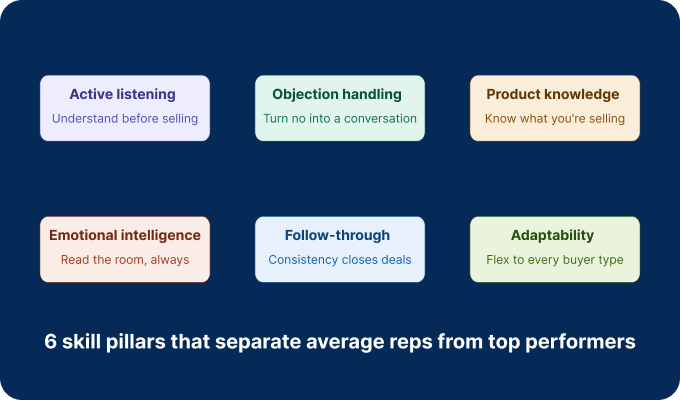
The short answer: active listening, product knowledge, emotional intelligence, objection handling, resilience, and follow-through. But let’s unpack what each of these really means in practice because the words are simple, the execution rarely is.
Active Listening: The Skill Everyone Claims but Few Practice
Most salespeople hear. Fewer actually listen. Active listening means pausing, reflecting back what the prospect said, and asking follow-up questions that show you were paying attention. It’s one of the most underrated skills for a sales rep, and it’s what makes a buyer feel understood rather than sold to.
Studies from the Harvard Business Review show that salespeople who ask between 11 and 14 discovery questions during a call significantly outperform those who stick to a fixed script. The magic isn’t in the pitch, it’s in the questions.
Practically speaking: resist the urge to fill silence. Let the prospect finish. Take notes. Then respond to what they actually said, not what you expected them to say.
How Does Emotional Intelligence Impact Sales Rep Performance?
Directly and measurably. Reps with higher emotional intelligence (EQ) are better at reading prospect hesitation, adjusting tone, and building rapport without seeming pushy. Research from TalentSmart found that EQ accounts for 58% of performance across all job types, and in sales, that number climbs even higher.
For a sales rep, EQ shows up in small moments: noticing when a client seems uncomfortable, knowing when to back off on a hard close, or understanding that today might just not be the right day. These aren’t instincts you’re born with, they’re trainable.
How Can You Build Emotional Intelligence as a Sales Rep?
Start with self-awareness. Before your next call, take two minutes to check in with your own energy. Are you frustrated? Rushed? That comes through on the phone every time.
Then build empathy as a habit. After each interaction, ask yourself: “What was the prospect actually trying to tell me?” This reflective loop, done consistently, accelerates EQ development faster than any workshop.
Why Is Product Knowledge a Non-Negotiable Skill for Sales Reps?
Because buyers have done their homework, and they’ll know if you haven’t. In industries like home improvement or SaaS, a prospect who walks into a conversation already knows your pricing tier, your competitors’ specs, and what Reddit says about your customer service.
According to Salesforce’s 2024 State of Sales report, 84%–87% of buyers say it’s critical for salespeople to act as trusted advisors, not just order takers. That trust is built on credibility. And credibility starts with knowing your product cold.
This is especially true in home improvement sales training environments, where reps are often explaining complex materials, installation timelines, or warranty structures to homeowners who aren’t familiar with the jargon. Confidence in your product knowledge removes hesitation from the buyer’s side, and hesitation is where deals die.
What Does Effective Objection Handling Actually Look Like?
It looks like a conversation, not a rebuttal. The instinct to “overcome” objections is actually counterproductive, it puts the rep on one side and the prospect on the other. The better frame is to explore the objection, because most objections are really just unanswered questions wearing a no-shaped coat.
The LAER model, Listen, Acknowledge, Explore, Respond, is widely used in improving the skills of sales reps and for good reason. It slows down the rep’s instinct to defend and speeds up the buyer’s willingness to share.
What Are the Most Common Objections and How Should Reps Handle Them?
The top four objections in B2B and B2C sales are almost always: price, timing, trust, and “I need to think about it.” Each one requires a different response style, but all of them benefit from curiosity rather than pressure.
For price objections: explore the gap between what they’re spending now and what the problem is costing them. For timing: understand what would need to change for it to be the right time. The goal is to make the objection smaller, not to bulldoze it.
How Does Resilience Fit Into Sales Rep Skills?
It’s the scaffolding everything else rests on. Sales is a profession with built-in rejection, and without resilience, even technically skilled reps burn out.
Resilience isn’t about ignoring bad calls or pretending a lost deal doesn’t sting. It’s about having a short recovery arc. The best reps feel the disappointment, process it quickly, and move to the next opportunity without carrying the weight of the last one.
Coaching sales reps on resilience means helping them build a “reset routine”, a brief ritual between tough interactions that creates mental separation. Even a five-minute walk, a quick debrief note, or a few deep breaths creates enough distance to reset before the next call.
What Role Does Follow-Through Play in Sales Rep Performance?
Enormous. Underrated. Criminally overlooked. According to research from the Salesforce State of Sales, confirms 84% of reps missed quota in 2023, partly due to inadequate follow-up. That gap is where deals go to die, and it’s entirely avoidable.
Follow-through isn’t about being annoying or relentless. It’s about being reliable. When a rep says, “I’ll send you that case study by Thursday,” the prospect is watching whether or not it actually arrives. Each kept promise builds trust. Each missed one erodes it.
Building follow-through as a habit means using CRM tools, calendar reminders, and structured cadences. It’s less about memory and more about systems.
How Should Managers Approach Coaching Sales Reps on Skill Development?
With specificity, not generality. Telling a rep to “be more confident” or “close harder” is noise. What actually works is identifying the one skill gap most affecting their numbers and designing a targeted practice plan around it.
The SBI (Sales Benchmark Index) framework recommends a “skill-will matrix” for coaching: map each rep’s current skill level against their motivation level, and coach accordingly. High skill, low motivation needs a different approach than low skill, high motivation.
What Does a Practical Skill-Building Plan Look Like?
For home improvement sales training specifically, a strong 30-day plan might include: daily call recordings reviewed for listening behavior, weekly role-plays on the top three objections, and bi-weekly joint rides where managers observe real conversations.
The key is feedback loops. Skills for a sales rep don’t develop in a vacuum they develop through repetition plus feedback. One without the other produces bad habits or stagnation.
How Is Technology Changing the Skills Sales Reps Need?
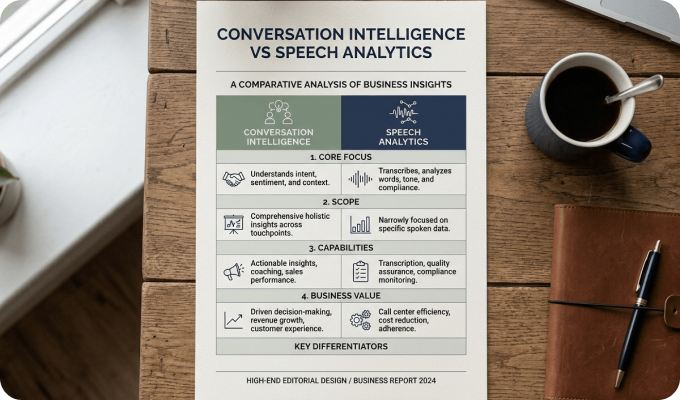
It’s changing the emphasis, not the foundation. Tools like AI-powered CRMs, conversation intelligence platforms (like Enthu.AI or Gong), and automated follow-up sequences handle many of the administrative tasks that used to eat rep time. What they can’t replace is judgment, empathy, and adaptability.
According to Salesforce, reps now spend only 28% of their week actually selling, the rest goes to admin, research, and internal meetings. Technology is slowly reclaiming some of that time. The reps who win in this environment are the ones who use that reclaimed time to deepen relationships, not just increase call volume.
Enhancing sales skills in a tech-forward environment means learning how to use AI tools for pre-call research, post-call analysis, and pipeline prioritization, while keeping human connection at the center of every conversation.
What’s the Difference Between a Good Sales Rep and a Great One?
Honestly? Consistency. Every rep has a good week. Great reps have good months. What separates them is the ability to apply their skill set reliably, across different buyers, different verticals, different emotional states, and to keep improving sales rep performance over time without needing a manager to push them.
A few patterns show up repeatedly in top performers:
They are relentlessly curious about their buyers. They review their own calls without being asked. They treat a lost deal as data rather than failure. They build relationships that outlast any single transaction. And they’re always looking for the one thing they could have done better, not to beat themselves up, but to be sharper next time.
How Can Sales Reps Improve Their Skills Consistently Over Time?
Deliberate practice beats general effort. Research from performance psychologist Anders Ericsson, whose work underlies the now-famous “10,000 hours” concept, shows that improvement comes from focused repetition in areas of weakness, not comfortable repetition of strengths.
For sales reps, that means identifying the part of the sales process where their conversion rate drops, and drilling that specific moment. If discovery calls go well but proposals stall, the skill gap is in the proposal. If leads come in but first calls don’t convert, the skill gap is in early rapport or qualification.
Track the metrics. Find the drop-off. Practice the transition. That’s how sales rep performance improves, sustainably, over a career.
Quick Recap: Sales Rep Skills That Drive Real Results
To tie it all together, the skills that most consistently predict high sales rep performance are active listening, emotional intelligence, deep product knowledge, structured objection handling, follow-through as a system, and the resilience to keep showing up after setbacks.
None of these is a fixed trait. All of them are learnable. The reps who internalize that truth and act on it with deliberate, consistent practice are the ones who make it to the top of the leaderboard and, more importantly, stay there.
Whether you’re in home improvement sales, enterprise software, or anything in between, the fundamentals are the same. The context changes. The skills don’t.
FAQs
1. What are the most important sales rep skills for beginners?
For anyone just starting out, the three non-negotiables are active listening, basic product knowledge, and follow-through. These three alone will put a new rep ahead of most of the competition, because the majority of beginners talk too much, know too little, and never follow up consistently. Master these first before layering in advanced techniques like consultative selling or complex objection handling.
2. How long does it take to improve sales rep skills noticeably?
Most sales managers see measurable improvement in a rep’s core skills within 60 to 90 days provided the rep is getting structured coaching, reviewing call recordings, and practicing specific weak areas. General “work harder” motivation rarely moves the needle. Focused, skill-specific practice with regular feedback is what creates noticeable growth in that window.
3. What skills for a sales rep are most relevant in home improvement sales specifically?
In home improvement sales, the highest-impact skills are product expertise, trust-building, and objection handling around price and timing because homeowners are making large, emotional, long-term purchases. Reps who can explain materials, warranties, and timelines clearly without overwhelming the homeowner consistently outperform those who rely on pressure tactics. Empathy and patience matter far more in this space than speed-to-close.
4. How can sales managers improve the skills of their reps without micromanaging?
The most effective approach is building a feedback-rich environment, not a surveillance-heavy one. This means regular one-on-ones focused on skill gaps (not just numbers), shared call libraries where reps can hear what great looks like, and clear development plans tied to specific behaviors not vague outcomes like “be more confident.” When reps understand exactly what to improve and why it matters, they tend to own the process themselves.
5. Can emotional intelligence actually be trained, or is it a fixed trait?
It can absolutely be trained. Emotional intelligence is a set of learnable behaviors self-awareness, empathy, emotional regulation, and social awareness not a personality type you’re born with. Structured exercises like reflective journaling after calls, perspective-taking practice, and mindful listening drills have all been shown in organizational psychology research to meaningfully increase EQ scores over time. It takes consistency, but it’s very much a skill, not a gift.
6. What’s the biggest mistake companies make when enhancing sales skills?
Treating skill development as a one-time event rather than an ongoing process. A two-day sales bootcamp followed by months of zero reinforcement produces almost no lasting behavior change research in adult learning consistently shows that skills require spaced repetition and real-world application to stick. The companies that consistently develop strong sales teams embed learning into the daily workflow: brief coaching check-ins, call reviews, and micro-practice sessions built into the regular schedule.
7. How does technology affect the sales rep skills needed today?
Technology handles more of the administrative and research load, which means the human skills empathy, judgment, adaptability, and relationship-building are now more valuable, not less. AI tools can surface insights, but they can’t build trust. Reps who learn to use CRM and conversation intelligence tools effectively, while keeping their interpersonal skills sharp, have a significant advantage in today’s sales environment.
8. What is the fastest way to identify a sales rep’s biggest skill gap?
Listen to their calls. Specifically, look for the stage in the sales process where their conversion rate drops most sharply. If prospects engage well early but disengage at the proposal stage, the gap is likely in how value is communicated in writing. If first calls rarely convert to second meetings, the gap is usually in early rapport or qualification. Data from your CRM pipeline stages, combined with call recording review, gives you a precise diagnosis far faster than any assessment tool.

 On this page