


Are you tired of fumbling through endless lists of contact center software, desperately searching for the perfect tool to boost your customer service game in 2026?
Well, the hunt is over, and the good news is, you don’t need to be a tech genius to make the right choice!
Whether you’re a small business or a large corporation, these software solutions can help.
They will let you provide the best customer service. Small businesses want to connect with customers.
Large companies want to improve customer support.
But why should you care about them, and why are they so important for your contact center?
Let’s dive in and explore how these tools can transform your customer interactions, boost your productivity, and ultimately make your life easier.
It’s time to take your customer service to the next level! In this article, we’re going to introduce you to the 17 best contact center software options for 2026.
How we analyze and select Call Center Software?
We have compiled the following list of top-notch call center software through extensive research and evaluation. Our process involved actively weighing factors like user experience, G2 ratings and reviews, cost, and scalability.
We assessed the proficiency of these tools in call automation, sentiment analysis, transcriptions, quality assurance and provides performance metrics.
We have invested significant time and resources into compiling this list. Our goal is to give marketers helpful information so they can pick the best tools to make their businesses grow.
A. What is contact center software?
Contact center software is a digital platform that unifies all customer interactions into one place. Unlike traditional call centers that rely only on phone calls, modern contact centers support voice, email, live chat, SMS, social media, and even messaging apps like WhatsApp.
In 2026, the best solutions also integrate AI, chatbots, and self-service tools to automate routine tasks and provide instant responses. They connect seamlessly with CRM systems so agents have customer history and context at their fingertips.
The goal is simple: deliver a consistent, personalized experience across every channel, so customers don’t feel like they’re starting over each time they reach out.
B. Top 17 contact center software for your business needs
1. Enthu.AI

Enthu.AI is one of the top contact center software available in the market.
Enthu.AI captures 100% of your voice calls, transcribes them, and brings out meaningful analysis from those transcriptions.
It is an AI tool specially designed for contact centers and sales teams that provide insights on important call moments, agent performance, coaching opportunities, and customer insights.
Every feature of Enthu.AI is designed to simplify sales call monitoring, sales training, and coaching.
This is why Enthu.AI is used by the ‘N’ number of users and is always rated 4.9/5 on software review platform G2.

The interface looks nice. Integrations are ready quickly. Have low costs, great monthly subscription. Best call transcription with analysis! Responsive team. Highly recommend!
Alex McConville
Head of Central Sales

Enthu. AI is an amazing and flexible conversational intelligence with strong integration capabilities. Provides high level of accuracy on call transcript and has strong word recognition.
Scott Bierbryer
Chief Revenue Officer
Best For:
Sales teams, consumer brands, small to mid-sized contact centers, D2C, appointment setters, collections team.
- Use cases supported: Quality assurance, agency coaching, process improvement, customer experience, and the voice of the customer.
- G2 Rating: 4.9 out of 5
- Languages supported: English, French
- Key features: Top accuracy, 100% call coverage, agent-wise analysis, custom call moments, and custom evaluation forms.
- Pricing: Custom

2. Aircall

Aircall is one of the most popular cloud software solutions used by SMBs.
It is easy to adopt, is scalable, and can be used in remote work environments as well.
Above all, it is light on the pocket and can accommodate multiple teams.
- Pricing: Starting from USD 30 per agent per month
- Free plan available: No
- Free trial available: Yes, for 7 days
- Strengths: Voice quality, simplicity of application, cross-device functionality, integration stability
- Areas of improvement: App ergonomics, minor recurring bugs
- G2 Ratings: 4.3 out of 5, based on 500+customer reviews
Best For
IVR support, Call routing, skill-based routing, Call whispering, Live call monitoring, reporting and analytics
Based on customer reviews on different online platforms, here are some of the many pros and cons.
3. JustCall

JustCall is a call center software solution purpose-built for customer-facing teams. It comes with advanced voice and SMS features along with AI-powered capabilities that help agents engineer better customer conversations.
It easily integrates with 100+ CRM, help desk, and business tools enabling agents, teams, and managers to enjoy seamless workflows and build productive experiences.
- Use cases supported: Voicemail transcription, outbound & inbound calling
- G2 Rating: 4.1 out of 5
- Free trial available: No
- Key features: Record Calls, IVR, call queues
- Pricing: Custom pricing ( Starts from $19 per agent per month)
Best for
Sales dialer, call monitoring, Conversation intelligence, call analytics and call summary
Based on customer reviews on different online platforms, here are some of the many pros and cons.
4. CallHippo

CallHippo is a cloud-based call center software designed to help businesses enhance customer communication with advanced calling features and seamless integrations.
It offers a user-friendly interface, quick setup, and robust analytics to optimize call center operations.
Best for
Businesses looking for a scalable, feature-rich, and easy-to-use VoIP-based contact center solution
- Pricing: Starting from $18 Per User/Month
- Free plan available: No
- Free trial available: Yes
- G2 Ratings: 4.4 out of 5 stars based on 300+ customer reviews
Strengths: User-friendly interface, Integrations with CRM and helpdesk software, advanced call management features like IVR, call forwarding, AI Agents, AI chat support, and smart call routing
5. RingCentral

RingCentral is a cloud-based phone system for call centers that integrates seamlessly with various CRMs and has omnichannel support.
It supports both desktop and mobile users. It has a very defined agent management module along with a skill-based call routing system.
It comes with different pricing plans thus suiting both SMBs and enterprise clients.
- Pricing: Starting from $19.99/user/month
- Free plan available: Yes, for 14 days
- Strengths: Cost-effective, Integrations with most CRM tools, friendly admin web interface
- Areas of improvement: Complicated to set up, customer support, call quality
- G2 Ratings: 3.8 out of 5, based on 600+ customer reviews
Best for
Ticket management systems, Cloud-based, Call routing enabled, Outbound dialer, API, IVR, and speech recognition
Based on customer reviews on different online platforms, here are some of the many pros and cons.
6. Avaya

Avaya comes in two avatars – an on-premise solution as well as a cloud-based solution. As per their website, 90% of Fortune 100 companies are on Avaya. They have been the pioneer in this industry and have very stable enterprise-level products. But it comes at a cost.
- Use cases supported: Workforce Management, Auto Dialer, Performance Analysis
- G2 Rating: 4.1 out of 5
- Free trial available: No
- Key features: Reporting, Screen Capture, Live Monitoring.
- Pricing: Starts from $82 per agent per month.
We gathered countless genuine user reviews about Avaya from sites such as G2 and Capterra. We have focused on the key aspects that are crucial for practical use. Here’s what we found:
7. BT.com

BT contact solution is available both on the cloud and on-premise.
It can support legacy systems and provides options for flexible scaling.
It further gives an option of call blending which means the same agent can be on an inbound or outbound call.
Best for
Call routing, Real-time monitoring, Workflow management
Based on customer reviews on different online platforms, here are some of the many pros and cons.
8. CloudTalk
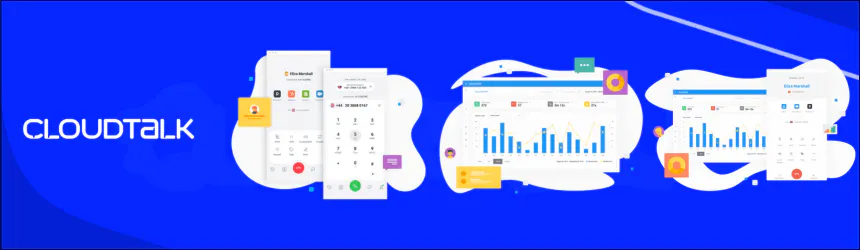
CloudTalk is a great cloud solution that comes with a plethora of great features.
It has highly customizable features like the ability to create customer call queues, automatic call distribution, etc which makes it an ideal solution for your contact center.
CloudTalk also provides options like customized voicemails and greetings and helps you create a great brand experience over the calls.
- Use cases supported: Outbound Call Tracking, Workforce Management, Performance Analysis
- G2 Rating: 4.3 out of 5
- Free trial available: No
- Key features: Click to call, Voicemail, Call transfer
- Pricing: Custom pricing (Starting price $25 per agent monthly)
Best for
Call queue, Automatic call distribution, Click-to-call, CRM integration, Real-time call monitoring
Based on customer reviews on different online platforms, here are some of the many pros and cons.
9. MirrorFly

MirrorFly is one of the renowned call center solution providers helping businesses minimize their average response time and streamline outbound and inbound calls.
Plus, from expanding ways to connect with customers to generate reports to guiding agents, businesses can achieve a lot with MirrorFly’s in-app SDKs.
In addition to these, the presence of real-time communication capabilities like instant messaging, group video calls, audio chats, and 1000+ eminent features help agents deliver superior customer service experience in seconds.
- Pricing: Custom price
- Free plan available: No
- G2 Ratings: 4.4 out of 5
Best for
Call Recording, Call Transfer, Call Routing, Call Management System
10. TalkDesk

TalkDesk is one of the best contact center software available for enterprises.
The software is designed to handle large teams and huge call volumes.
TalkDesk provides AI voice analytics that can give your call center enriched data on customer needs and sentiments.
It also can be easily integrated with various CRMs and other solutions.
- Pricing: Starting from $75/user/month
- Free plan available: No
- Strengths: Dashboards, call quality, customizable, onboarding process
- Areas of improvement: Reporting, connectivity, recurring technical issues
- G2 Ratings: 4.4 out of 5, based on 1500+ customer reviews
Best For:
Automated scoring, speech analytics, call quality management
Based on customer reviews on different online platforms, here are some of the many pros and cons.
11. Genesys Cloud

Genesys is one of the oldest players in the contact center software space.
This is the best contact center software for small businesses, have great stability, and can handle large volumes of calls and agents.
It can handle calls, emails, chats, social media, and instant messaging. It has great functionalities like chatbots and voicebots.
- Use cases supported: Communications, Collaboration, and Contact center management.
- G2 Rating: 4.3 out of 5
- Free trial available: No
- Key features: Speech Analytics, Auto Dialer, IVR
- Pricing: The starting price is $75 per agent per monthly
Best for
Voice and chatbots, Workforce Management, Reporting, and analytics tools
Based on customer reviews on different online platforms, here are some of the many pros and cons.
12. Hubspot

Hubspot is famous with marketers and sales teams as a CRM.
But it provides a very strong contact center solution as well.
It is particularly useful for sales teams with its click-to-call capabilities and its ability to prioritize calls and set up call queues.
It is omnichannel and hence works for email scheduling as well as live chats.
It has a powerful help desk solution that can create very useful call center software.
- Primary Use Case: Improve prospecting efficiency, streamline deal management, and gain actionable insights to drive revenue growth
- Pricing: Sales Hub offers Professional and Enterprise plans. Professional plans start at $800/month.
- G2 Reviews: 4.4/5 (link to customer reviews)
Best For
CRM, Sales Enablement tool, Email Tracking
Based on customer reviews on different online platforms, here are some of the many pros and cons.
13. Nextiva
Nextiva is one of the most reliable cloud software available for call centers. In 2019 and 2020, there were zero outages of the software.
It has features like IVR, ACD, and call queuing. It can also help you with advanced features like virtual agents.
- Pricing: Starting from $26/user/month
- Free plan available: Yes, for 7 days
- Strengths: Onboarding process, powerful phone functions, easy to use, call quality
- Areas of improvement: Tech support, porting process
- G2 Ratings: 4.3 out of 5, based on 450+ customer reviews
Best For
Call recording, contact centers, VOIP Services
Based on customer reviews on different online platforms, here are some of the many pros and cons.
14. Bitrix24

Bitrix24 differentiates itself from others by including CRM features in its call center technology. It comes with built-in CRM features like pipeline management, sales reports, and sales automation.
It comes up with a desktop and a mobile app and works on Facebook, Messenger, Instagram, Skype, Viber, Telegram and more.
- Use cases supported: Sales Force Automation, Marketing Automation, Customer Support
- G2 Rating: 4.1 out of 5
- Free trial available: Yes
- Key features: Lead Management, Live Chat, Screen Sharing
- Pricing: Custom prices ( Starting price $24 )
15. Dialpad

Dialpad is ideal for SMBs and mid-market businesses.
It is easy to install, expand, and scale. One can add users in just a few clicks in very little time.
It also comes with a Chrome extension which enables basic functionality inside the browser making it a click-and-call play.
It comes with very good reporting and call-routing functionality.
- Use cases supported: Customer support, Sales intelligence, sales coaching
- G2 Rating: 4.4 out of 5
- Free trial available: Yes 14 days free trial
- Key features: AI sales tool, CSAT, chatbots
- Pricing: Custom prices
Best For
Call routing, Voice intelligence, Sentiment analysis
Based on customer reviews on different online platforms, here are some of the many pros and cons.
16. Dixa

Unlike other options, Dixa is a browser-based cloud software.
It is easy to set up and use and their pricing model allows you to pay as you go.
One can upsize or downsize the teams as and when required without any additional costs.
It makes it very friendly for small and medium-sized businesses.
It comes with capabilities like call recording, call barging, and very solid customer support.
- Use cases supported: Quality Assurance, Performance Analysis, Transcripts
- G2 Rating: 4.2 out of 5
- Free trial available: Yes
- Key features: Live Chat Support, QA evaluation & calibration
- Pricing: Custom prices ( Starting price $39 per agent per month)
Best for
Call transcription, Call quality, QA, IVR, agent performance, Feedback
Based on customer reviews on different online platforms, here are some of the many pros and cons.
17. Squaretalk

Squaretalk is a cloud contact center platform built for teams that need voice + messaging in one place.
It supports inbound and outbound calling, WhatsApp Business, and AI features like call summaries, transcripts, and sentiment analysis.
You also get 150+ country numbers to localize outreach. It scales from small teams to multi-office deployments without heavy IT work.
- Use cases supported: Outbound sales, QA & coaching, process improvement, CX analytics.
- G2 Rating: 4.8 out of 5
- Free Trial : No
- Key features: IVR & ACD, AI summaries & transcripts, predictive dialer, AI voice agents.
- Pricing: Starts at $25/m
Best For
IVR, ACD call routing, predictive/outbound dialing, AI call analysis, WhatsApp messaging, dashboards & reporting
Based on customer reviews across trusted platforms, here are the common pros and cons.
C. What does contact center software do?

At its core, contact center software helps businesses handle a large volume of customer interactions. Here’s a breakdown of its key functions:
1. Handling Calls
- It directs incoming calls to the respective agents, depending on the caller ID, the reason for the call, and the skill of the agent.
- The agents may place outbound calls quickly, usually aided by a click-to-call feature or an automated dialing system.
- Listen to the calls for quality assurance and training.
2. Managing Multiple Channels
- AI contact center software integrates all these channels: email, chat, social media, SMS, and more.
- That way, the agents handle all the interactions from different platforms within a single interface, giving the customer a more unified experience.
3. Providing Customer Information
- Storing information about a customer, including contact details, past interactions, and purchase history.
- This gives the agents quick access to the necessary information for a personalized customer experience.
4. Tracking and Reporting
- Generating reports on key metrics: call volume, average handling time, and customer satisfaction scores.
- Such data can be utilized by businesses to identify shortcomings and optimize their operations when it comes to customer experience.
5. Automating Tasks
- Automating simple but repetitive work: from sending automated responses to the typical questions to call routing according to pre-defined rules.
- This allows agents to deal with more complex matters.
6. Improving Agent Efficiency
Providing tools to improve agent performance: whether it is providing a single screen with all the information they need or offering them tools to speed up their ability to find answers to customer queries.
D. Features of call and contact center software to look for

When choosing contact center software, consider these key features:
- Call Routing: Locate intelligent call routing features to direct calls to the most appropriate agent.
- Interactive Voice Response (IVR): IVR systems have been designed to allow callers to enter information through selected menus and options before speaking to an agent.
- Computer Telephony Integration (CTI): All the features of the call center system work within CTI that is Computer Telephony Integration most invokes and integrates phone systems and computer systems, and agents can right from their desktops access customers’ information and integrate telephone functions.
- Omnichannel Capabilities: Check if the software provides support for all the communication channels that your clients use.
- Reporting and Analytics: Look for solid reporting and analytics features to offer a good line of sight into the performance of the contact center.
- Integration with CRM: Integration between CRM systems allows agents access to a complete picture of customer interactions.
- Cloud-based vs. On-Premise: Cloud-based solutions offer flexibility and scalability; on-premise solutions offer more control.
- Ease of Use: Such software should be uncomplicated for use by agents and administrators.
- Scalability and Flexibility: Once deployed, the software should be able to scale up and down accordingly, as the business needs demand.
- Reliability and Security: The software should be reliable and secure to protect customer information, as well as provide guaranteed uptime.
- Agent Tools: Agents need good tools and a great screen layout, easy access to customer information, and rapid ways to write notes about the call.
E. Who uses contact center software?
Contact center software is used by a wide range of businesses, including:
- Customer Service Departments: For handling customer inquiries and resolving issues.
- Sales Teams: For making outbound sales calls and managing leads.
- Technical Support Teams: For providing technical assistance to customers.
- Healthcare Providers: For managing patient appointments and providing medical information.
- Financial Institutions: For handling customer transactions and inquiries.
- E-commerce Businesses: For managing customer orders and providing support.
Conclusion
There are many options available in the market for your call center needs.
It is always advisable to understand and pen down your needs and create a cost-benefit analysis of various shortlisted options to make a wise decision.
Don’t be enamored by the shiny features marketed by this software. You have to evaluate your specific use cases and understand if a particular feature is required by you and if it is worth paying a price for that.
You need to understand that selecting software is an important decision as it is not often easy to shift to other software as it entails integration costs, training costs, and change management costs.
Thus, make a very informed decision while selecting a contact center software for your business.
FAQs
1. What is the best contact center software for small businesses?
The best contact center software for small businesses really depends on what you want. Enthu.AI, Five9, Talkdesk, and Aircall are the most popular options since they offer an attractive price point, ease of use, and scalability. These platforms ideally fit that growing business market, providing features from call routing and IVR to CRM integrations and omnichannel support.
2. How do I choose the right contact center software?
There are a few considerations when choosing the right type of contact center software.
- Business size: Go with an app that scales as your company grows.
- Key features: Look for IVR, omnichannel support, analytics, and AI automation.
- Integration with CRM: Seamless connectivity with CRM tools improves cruising speed.
- Pricing & flexibility: Choose a plan that isn’t spending you over your budget.
- Customer support: Reliable support, after all, guarantees smooth sailing. By evaluating these factors, you will be able to select software that is in line with the business objectives of your company.
3. What is the difference between a contact center and a call center?
A call center deals with voice-only interactions: inbound and outbound calls focusing on customer support or sales. Contact centers have a broader act; they handle customer interaction over various channels phone, email, live chat, and social media. In other words, contact centers offer a comprehensive customer experience considering the support for omnichannel communication and automation tools.
4. How does contact center software improve customer experience?
Contact center software enhances customer experience by:
- Reducing wait times – Automated routing and IVR streamline call handling.
- Offering omnichannel support – Customers can reach you via phone, chat, or email.
- Personalizing interactions – AI-driven insights help agents deliver better responses.
- Providing real-time analytics – Helps businesses optimize performance and improve service quality.
- Automating repetitive tasks – AI chatbots and self-service options enhance efficiency.
Integrating all these features allows businesses to provide seamless, efficient, and personalized customer support that increases satisfaction and retention.

About the Author

Tushar Jain
Tushar Jain is the co-founder of Enthu.AI, a contact center intelligence software that helps teams automate quality assurance, coach agents and analyse customer interactions at scale. In the last 5 years, Tushar has personally overseen 100+ deployments of AI-driven analysis across sectors including lending, insurance broking, home improvements, lead gen agencies and real estate. Before founding Enthu.AI, Tushar led GTM at multiple consumer organisations where he first encountered the gap between call recording offered and and what managers actually needed to improve agent performance. Enthu.AI is currently rated 4.9/5 on G2 across 40+ verified reviews.


