Improving quality assurance in your call center requires a systematic approach combining clear metrics, AI-powered automation, continuous coaching, and omnichannel monitoring.
The most effective strategy focuses on monitoring 100% of conversations with automated scoring while providing agents with real-time feedback and developmental support
This guide reveals what the top-performing contact centers do differently. You’ll get actionable tactics that work whether you handle 50 calls daily or 5,000.
No fluff, no corporate speak – just strategies you can implement this week.
Ready to stop losing customers to poor service quality?
Let’s get started!
15 strategies to improve quality assurance in your call center
Though there are numerous ways to improve call center quality assurance, here are 15 most effective ways to get started!
1. Define clear QA metrics and benchmarks
You can’t improve what you don’t measure.
Start by identifying specific metrics that align with your business goals. The most impactful QA metrics include:
| Metric | What It Measures | Target Benchmark |
| First Call Resolution (FCR) | Issues resolved in one interaction | 70-75% |
| Customer Satisfaction (CSAT) | Overall satisfaction score | 80%+ |
| Average Handle Time (AHT) | Call duration efficiency | 6 minutes |
| Quality Score | Agent adherence to standards | 85%+ |
| Compliance Rate | Policy adherence percentage | 95%+ |
These benchmarks give you concrete targets.
But here’s the key: customize them to your industry and customer expectations. A technical support center will have different AHT targets than a sales team.
Track these metrics weekly, not monthly. Early detection of quality dips allows faster course correction.
2. Implement AI-powered automated scoring
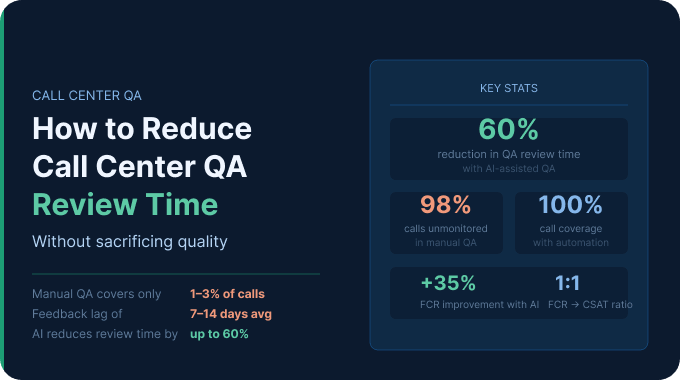
Your QA team can only review 2-5% of calls. That means 95% of customer interactions go unchecked.
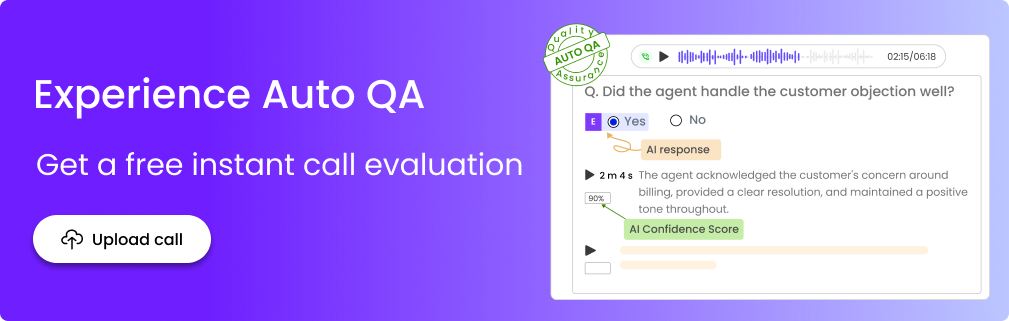
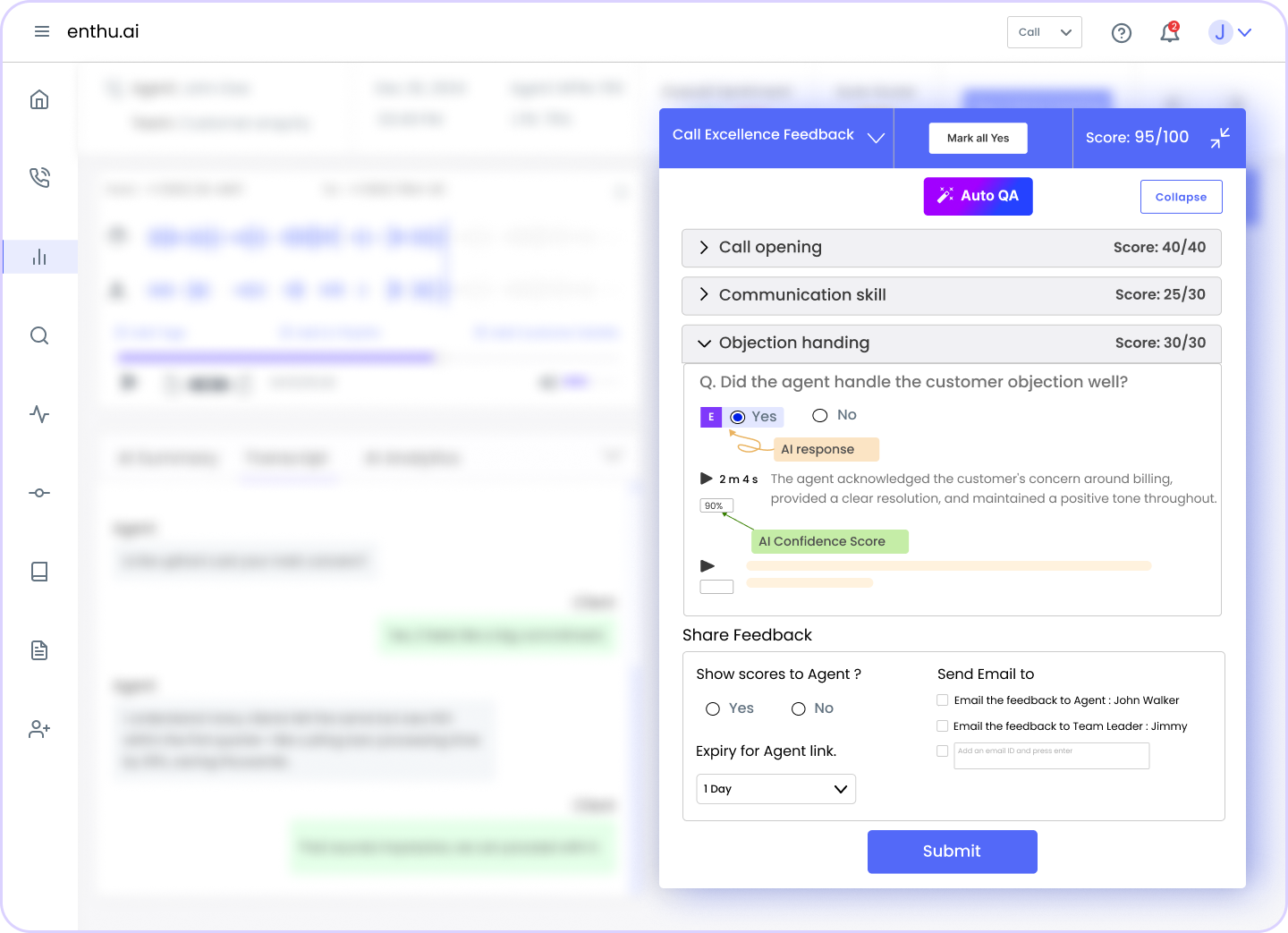
AI-powered quality monitoring changes everything. These systems analyze 100% of your conversations, scoring them against your quality criteria automatically.
Modern AI evaluates both hard skills (accuracy, efficiency, grammar) and soft skills (empathy, patience, active listening) across every channel. You get comprehensive performance insights without manual labor.
The result? 90% reduction in compliance review time while maintaining higher accuracy than human scoring.
3. Monitor calls in real-time
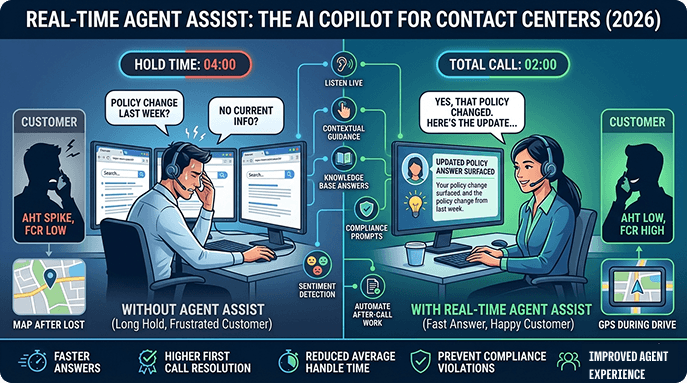
Real-time monitoring lets you catch problems while they’re happening, not days later during a weekly review.
Set up systems that flag calls with risk indicators – negative sentiment, escalation keywords, or compliance violations. Supervisors can then listen in and intervene when necessary, preventing customer churn before it happens.
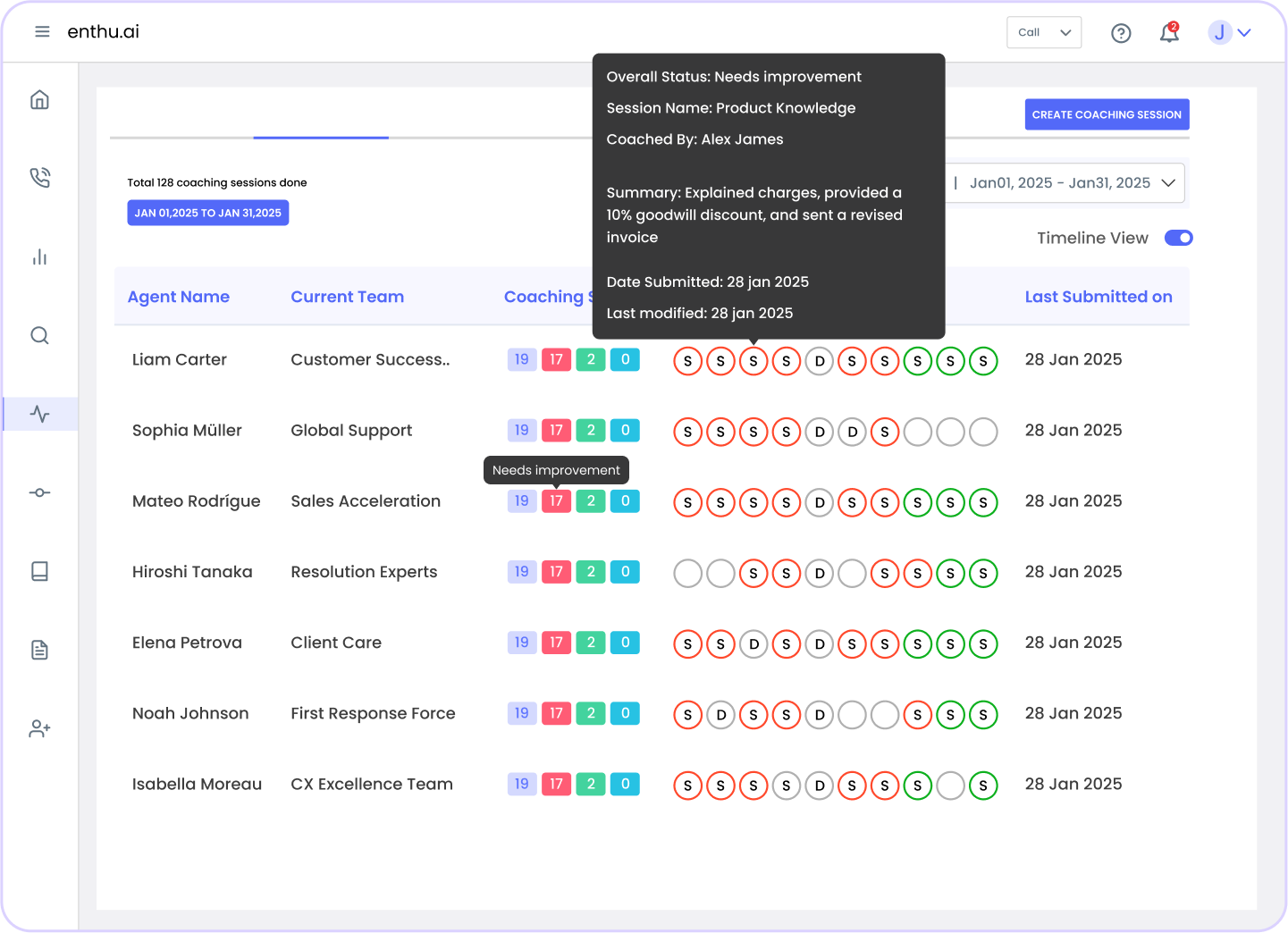
Live monitoring also creates immediate coaching opportunities. You can deliver context-aware feedback right after challenging calls when the interaction is fresh.
4. Create a comprehensive QA strategy
Random call checks won’t cut it. You need a structured approach.
Your QA strategy should answer these questions:
- What does “quality” mean for your specific business?
- How frequently will you conduct evaluations?
- Who owns the QA process and accountability?
- What tools and technology will support your efforts?
- How will you translate insights into agent improvements?
Work backwards from your goals. If you want to hit 85% CSAT, which behaviors and metrics drive that outcome? Build your QA framework around those specific inputs.
5. Monitor all customer support channels
Your customers don’t care which channel they use, they expect consistent quality everywhere.
If you offer omnichannel support, you need omnichannel QA. Develop channel-specific scorecards that account for each medium’s unique requirements. Email needs different quality criteria than phone calls, which differ from live chat.
For phone monitoring, mix announced and unannounced evaluations. This reveals whether agents maintain quality standards consistently or only when they know you’re listening.
6. Assign clear QA ownership
Quality assurance needs a dedicated owner, or it becomes everyone’s responsibility, which means no one’s responsibility.
This doesn’t require a manager. Giving ownership to a high-performing agent creates growth opportunities and encourages team buy-in. The key is clarity: one person or team drives the QA process forward.
Your QA owner should have the authority to implement changes, access to all necessary data, and direct reporting lines to leadership.
7. Provide continuous, data-driven coaching
Feedback once a quarter doesn’t work. You need ongoing coaching integrated into your daily operations.
The best coaching is specific and timely. Instead of “be more empathetic,” try “I noticed you interrupted the customer at 2:15 in the call. Next time, let them finish before offering solutions.”
Make coaching positive and developmental, not punitive. When feedback feels like an attack, agents become defensive. Frame it as growth opportunities backed by data.
Share both strengths and improvement areas. Reinforcing what agents do well makes them more receptive to constructive criticism.
8. Enable agent self-monitoring
Your agents are adults. Treat them like it.
Schedule brief post-shift reviews where agents assess their own performance. This builds accountability and catches issues while they’re fresh in memory.
Provide agents with real-time access to their performance dashboards. Transparency removes the mystery from evaluations and gives them ownership over their scores.
Consider peer coaching sessions where agents practice difficult scenarios together. This builds problem-solving skills and team cohesion simultaneously.
9. Invest in purpose-built QA software
Spreadsheets are costing you time and accuracy.
Modern QA platforms offer capabilities that manual processes can’t match:
- Automated call recording across all channels
- Speech analytics that detect sentiment, keywords, and compliance risks
- Performance dashboards with real-time metrics
- Automated workflows that route flagged calls to specialists
Look for solutions that integrate with your existing CRM and communication platforms. Disconnected tools create data silos that hide valuable insights.
The right software pays for itself through time savings and improved quality scores.
10. Conduct root cause analysis on critical issues
When serious problems occur, don’t just fix the symptom, eliminate the disease.
Root cause analysis (RCA) digs deeper to find underlying issues. Did the agent lack training? Is the script confusing? Does your knowledge base have outdated information?
Solving root causes prevents future occurrences. This saves the time and resources you’d spend repeatedly addressing the same problems.
Document your RCA findings and share learnings across the team. One person’s mistake becomes everyone’s lesson.
11. Ensure compliance and brand consistency
Compliance violations can cost you customers, revenue, and legal penalties.
Build compliance checks into every QA evaluation. Monitor adherence to industry regulations, company policies, and service level agreements. Modern QA software can automatically flag potential violations in real-time.
Brand voice consistency matters too. Every agent should represent your brand values in their interactions. Include opening greetings, closing statements, and tone assessments in your QA scorecards.
12. Track and celebrate improvements
People need to see their progress.
After coaching sessions, follow up with specific feedback about improvements. “Your empathy scores increased 15% this week” hits differently than generic “good job” praise.
Public recognition motivates both the recipient and their peers. Create friendly competitions around quality metrics with tangible rewards for top performers.
Gamification works. Agents with visible progress and recognition are more profitable according to engagement research.
13. Involve agents in creating QA criteria
Your agents know the job better than anyone. Use that knowledge.
Involve them in developing QA checklists and evaluation criteria. This accomplishes two things: you get better, more realistic standards, and agents feel ownership rather than micromanagement.
Quality circle discussions bring agents and supervisors together to identify improvement opportunities collaboratively. This team approach uncovers insights that top-down mandates miss.
When agents help create the rules, they’re more invested in following them.
14. Perform regular QA audits
Your QA process itself needs quality checks.
Schedule comprehensive audits every six months to evaluate your entire QA framework. Are you measuring the right things? Are your benchmarks realistic? Is your process delivering results?
Audits reveal systemic issues that daily monitoring misses. They’re your opportunity to course-correct before small problems become major failures.
Use external auditors occasionally for unbiased perspectives on your QA effectiveness.
15. Build a Customer-Centric Culture
Quality assurance isn’t just a QA team responsibility, it’s an organizational mindset.
Embed customer-first thinking throughout your company. When everyone from leadership to billing understands their impact on customer experience, quality improves naturally.
Share customer feedback widely. Let your team hear the voice of the customer directly. Real stories create emotional connections that policy manuals never will.
Make customer satisfaction a metric that every department owns, not just the contact center.
How AI transforms call center quality assurance
Traditional QA relies on random sampling and manual reviews. AI-powered QA monitors every interaction automatically.
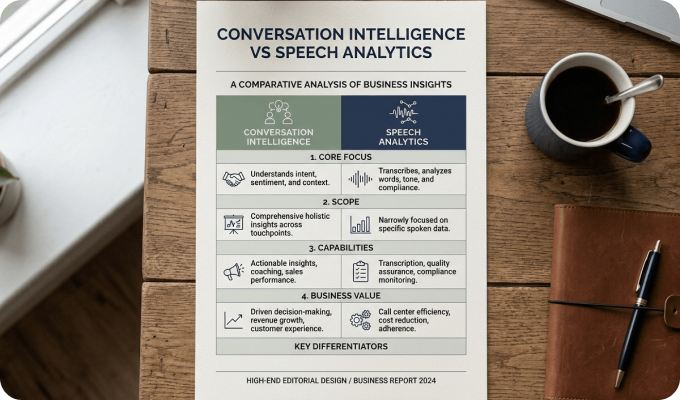
Modern conversation intelligence platforms transcribe calls with speaker labels and timestamps, making every conversation searchable. They auto-generate summaries, extract key points, and identify next steps instantly.
AI scoring evaluates calls across parameters like empathy, compliance, and script adherence, then provides actionable insights for improvement. You’re not just identifying problems; you’re getting specific recommendations for fixing them.
The biggest game-changer? Real-time assistance during calls. AI agents can prompt agents with next-best-actions, surface relevant knowledge articles, and flag compliance risks as conversations unfold.
This shifts QA from reactive evaluation to proactive prevention.
What are the Common QA Mistakes to Avoid
- Sampling too few calls: Reviewing 2% of interactions gives you an incomplete picture. Aim for comprehensive coverage with AI tools.
- Focusing only on negatives: Agents need to know what they’re doing right, not just wrong.
- Inconsistent evaluation standards: Different reviewers applying different criteria destroys fairness and trust.
- Ignoring the “why” behind metrics: Low scores are symptoms. Find the root causes.
- Making QA punitive instead of developmental: Fear-based QA creates resentment and turnover.
- Failing to act on insights: Data without action is worthless. Convert findings into concrete improvements.
How to Measure QA Program Success
Track these indicators to gauge your QA program’s effectiveness:
- Quality score trends: Are scores improving over time?
- Customer satisfaction movement: Is CSAT rising as QA improves?
- First call resolution rates: Are agents solving more issues faster?
- Agent turnover rates: Good QA reduces turnover through better coaching
- Compliance violations: These should decrease with better monitoring
- Time-to-proficiency: New agents should reach targets faster with QA insights
Set quarterly goals for each metric. Review progress monthly and adjust tactics as needed.
Ready to transform your call center quality assurance?
Stop manually reviewing 2-5% of calls and start monitoring 100% of conversations automatically.
Enthu.AI’s intelligent agents automate your entire QA workflow, from transcription to scoring to real-time coaching. Get the same results top-performing contact centers achieve: 90% reduction in compliance review time, improved agent scores, and faster issue resolution.
See how easy it is to implement AI-powered quality assurance that actually works. No six-month setup. No complicated configurations. Just results you can measure from day one.
Book your Free demo today.
FAQs
1. What is the most important QA metric for call centers?
First Call Resolution (FCR) is often most impactful because it directly affects customer satisfaction and operational costs. When agents resolve issues on the first interaction, customers are happier and you handle fewer repeat calls. However, the “most important” metric depends on your specific business goals and customer expectations.
2. How often should you perform quality assurance evaluations?
Modern AI-powered QA should analyze 100% of interactions automatically. For detailed human reviews and coaching sessions, aim for weekly check-ins rather than monthly or quarterly reviews. Frequent, brief coaching sessions are more effective than infrequent, lengthy performance discussions that address stale issues.
3. How do you reduce bias in quality assurance scoring?
Implement automated AI scoring to eliminate human bias and ensure consistent evaluation standards. Clearly define scoring criteria with specific examples. Use multiple reviewers for calibration sessions. Allow agents to dispute unfair evaluations. Regular audits of your QA process help identify and correct systematic bias issues.


 On this page