A customer calls your contact center at 2 AM about a billing error. Instead of holding for 45 minutes, they speak to an AI voice agent that authenticates their identity, pulls up the account, resolves the issue, and sends a confirmation email. All in under three minutes.
That’s not a demo. That’s Tuesday in 2026.
Voice AI agents have moved from science project to operational reality faster than almost anyone predicted. Gartner projected that conversational AI deployments in contact centers would reduce agent labor costs by $80 billion by 2026, with 1 in 10 agent interactions fully automated, up from 1.6% just a few years earlier. The voice AI agents market alone is projected to reach $47.5 billion by 2034.
This guide covers what voice AI agents are, where they deliver real ROI, the top 8 platforms worth evaluating, and how to figure out whether your contact center is ready for one.
What Are Voice AI Agents?
A voice AI agent is software that handles live phone conversations using natural language understanding, speech recognition, and machine learning. Unlike the clunky IVR menus that made customers scream “AGENT” into their phones for decades, modern voice AI agents understand intent, maintain context across turns, retrieve data from your CRM, and take actions like booking appointments, processing refunds, or escalating to a human with full context.
Think of them as conversational voice AI, not just a smarter phone tree. They listen, they understand, and they act. If you want the broader landscape of how AI is transforming contact centers, we cover that separately.
5 Use Cases Where Voice AI Agents Deliver Real Results
Voice AI agents do not replace humans for everything. They replace humans for the things humans should never have been doing in the first place. Here’s where the ROI is clearest.
1. Inbound Call Containment
This is the big one. Voice AI agents handle routine inquiries like order status, account balance, password resets, and appointment confirmations without ever touching a human. Retell AI reports that enterprise deployments have achieved 85% containment rates, meaning 85% of calls are resolved without a transfer. The math is simple. Fewer transfers, shorter queues, lower cost per call.
2. Appointment Scheduling and Reminders
Healthcare clinics, insurance agencies, and service businesses burn agent hours on scheduling calls that follow the same script every time. Voice AI agents handle the entire flow: check availability, book the slot, send the confirmation, and call back with a reminder.
3. Lead Qualification and Outbound Sales
AI voice agents can run outbound campaigns, qualify leads based on preset criteria, and route hot leads to human closers. They do not get tired. They do not have off days. They call at the times you set and follow the playbook every single time.
4. After Hours and Overflow Coverage
Most contact centers run skeleton crews at night and weekends. Voice AI agents run 24/7 at full capacity. No overtime, no shift differential, no burnout. For businesses with global customers across time zones, this alone justifies the investment.
5. Collections and Payment Reminders
Collections teams face high attrition and heavy compliance requirements. Voice AI agents deliver consistent, FDCPA-compliant reminders without the emotional fatigue that burns out human agents. For more on how AI agents work in call centers across different functions, we break that down in detail.

The ROI Case for Voice AI Agents
Let’s talk numbers, because “it saves money” is not a business case. Real data is.
Gartner estimates that labor represents up to 95% of contact center costs. Even modest automation, say 10% of interactions, translates to billions in savings at industry scale. That’s how the $80 billion figure lands.
At the company level, Broadvoice research reports a 250% ROI on AI investments in contact centers. Retell AI reports an 80% reduction in call handling costs in healthcare environments. McKinsey estimates that generative AI could automate up to 30% of the hours currently spent on customer operations.
But here’s the part nobody puts in the pitch deck. Gartner also estimates integration pricing at $1,000 to $1,500 per conversational AI agent, and complex deployments can take months or even years to fully build out. Early adoption is led by organizations with 2,500 plus agents that have the budget for the required technical resources.
Voice AI agents are not free. They are cheaper than the alternative, which is throwing more humans at a problem that scales faster than your hiring pipeline.

Where Voice AI Agents and Conversation Intelligence Meet
Here’s a nuance most vendor comparison articles skip. Voice AI agents handle calls. Conversation intelligence platforms analyze calls. They are not competitors. They are layers of the same stack.
Your voice AI agent resolves the billing inquiry at 2 AM. Your conversation intelligence platform like Enthu.AI then transcribes that interaction, scores it against your quality scorecards, flags compliance issues, and surfaces coaching insights for your human agents handling the complex calls during business hours.
The best contact centers in 2026 run both. The voice AI agent covers volume. The conversation intelligence platform covers quality. To understand how agentic AI ties it all together, start with that guide.
Top 8 Voice AI Agent Platforms for Contact Centers (2026)
This list focuses on platforms built for contact center voice operations, not general purpose chatbots or meeting transcription tools. All data comes from vendor documentation, G2, and public press materials.
1. PolyAI
Best for: Large enterprises running high volume inbound voice operations.
PolyAI builds voice assistants that handle complex, multi turn conversations with natural speech patterns. It is a voice first platform, purpose built for phone channel automation. Strong in hospitality, telecom, and financial services.
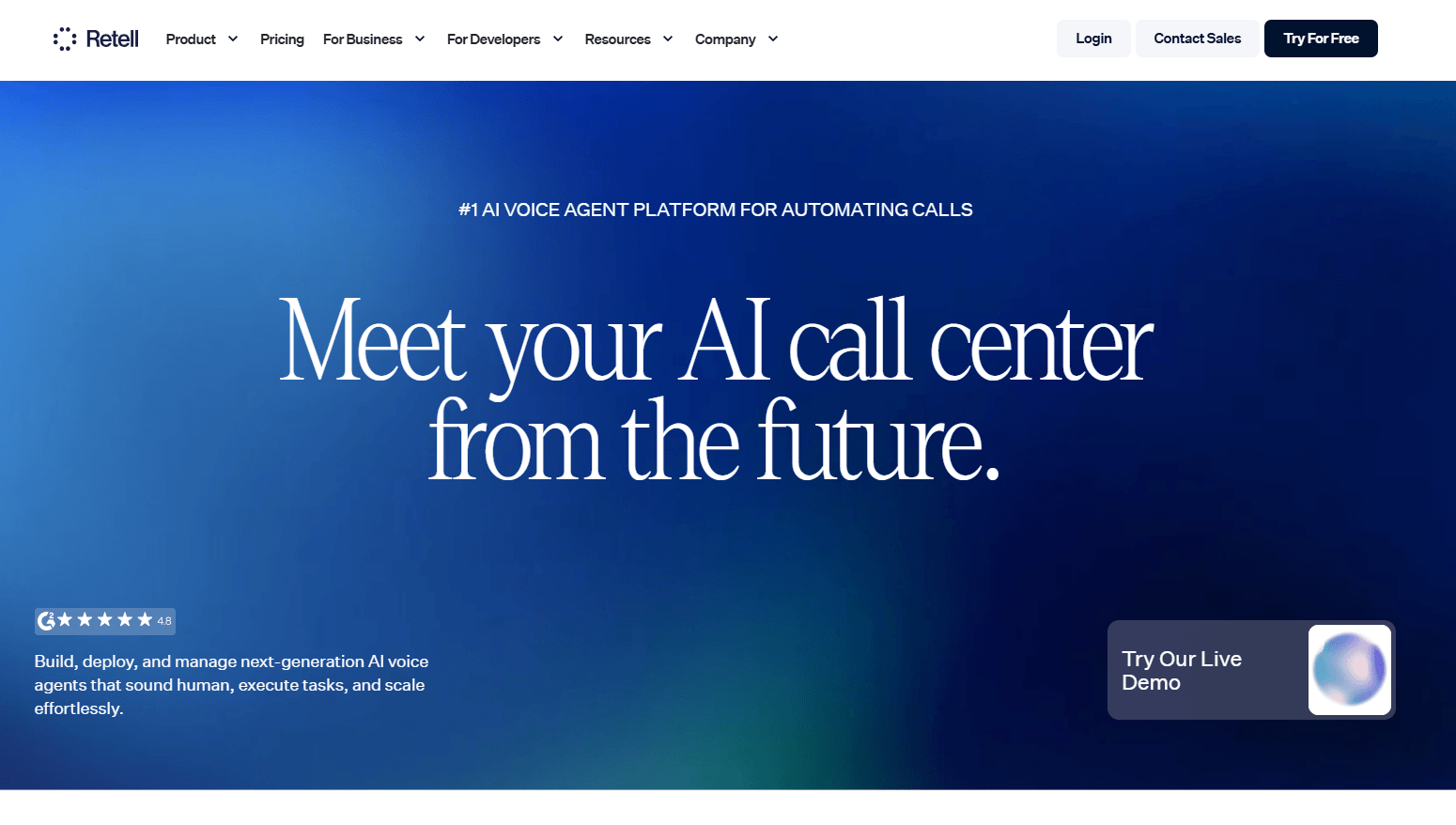
2. Retell AI
Best for: Enterprises needing carrier grade reliability and fast deployment.
Retell AI offers 99.99% uptime with seamless fallbacks across LLM and speech providers. Reports include 85% containment rates and 80% reduction in call handling costs. Won the 2026 G2 Best Agentic AI Software award, developer-friendly with deep API control.
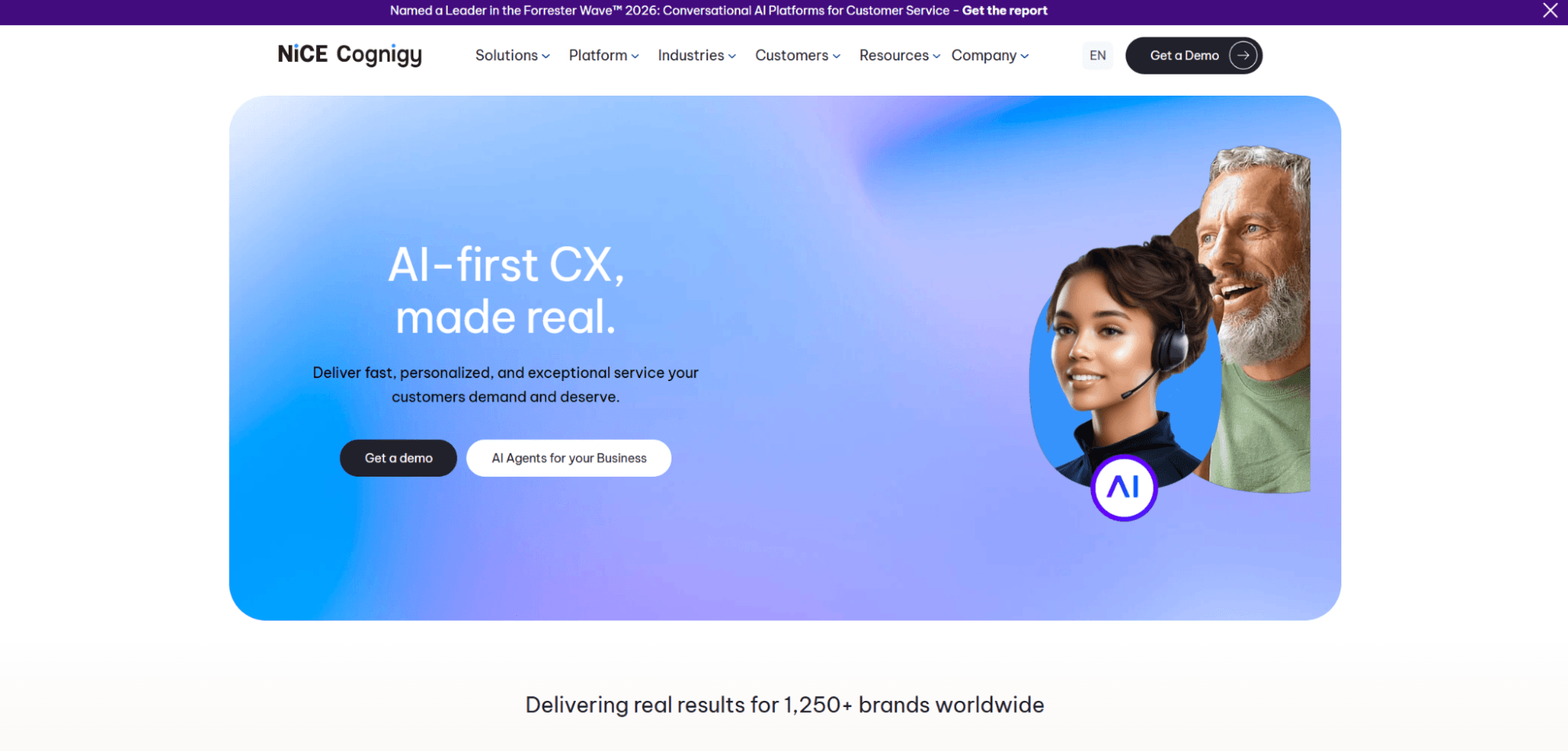
3. Cognigy
Best for: Large enterprises needing omnichannel AI across voice, chat, and messaging.
Cognigy is an enterprise-grade conversational AI platform that layers AI into existing contact center workflows. Strong integration with Genesys and other CCaaS stacks. Complex to implement, but powerful at scale.
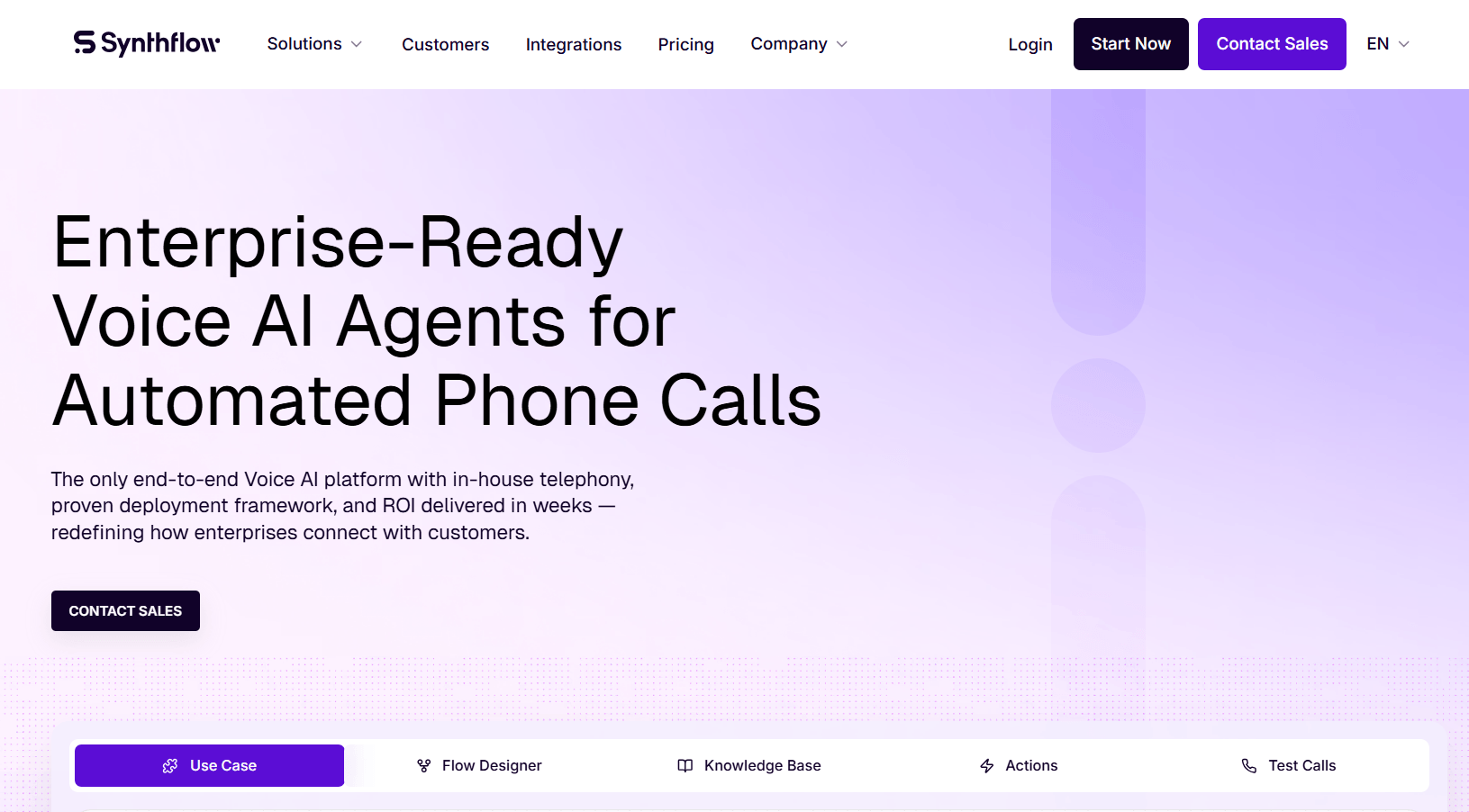
4. Synthflow
Best for: Growth companies needing fast, compliant deployment with transparent pricing.
Synthflow offers per minute pricing and deployment timelines of around three weeks. Reports a 42% improvement in call efficiency and 38% reduction in telephony spend. Strong for companies that want speed without enterprise complexity.
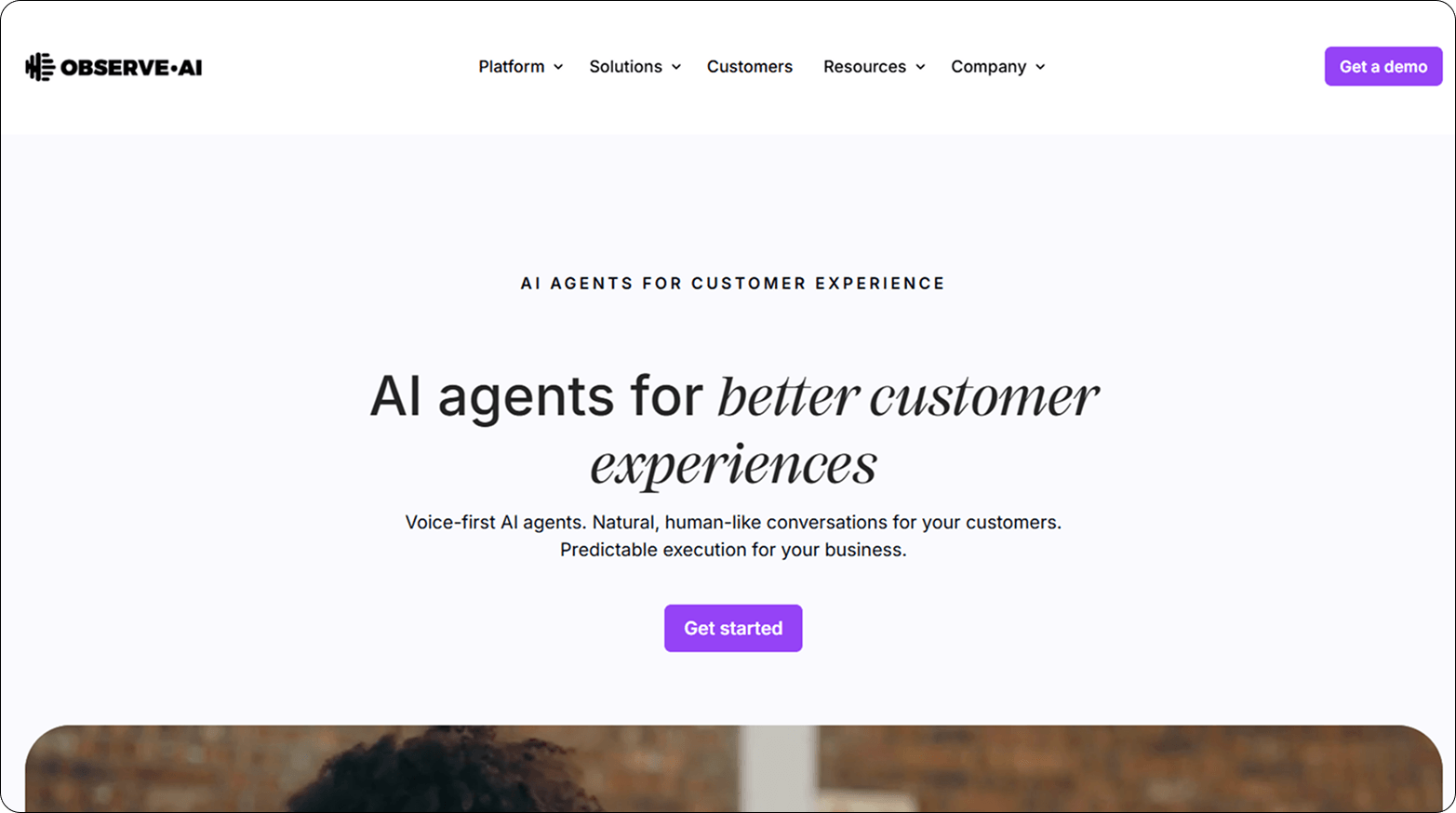
5. Observe.AI VoiceAI Agents
Best for: Enterprise contact centers already using Observe.AI for conversation intelligence.
Observe.AI now offers autonomous voice agents alongside its Auto QA and coaching platform. Backed by $214 million in funding. Serves 350 plus enterprises. Strong compliance certifications including HIPAA, SOC2, and GDPR. If you already use their platform, adding voice agents keeps everything in one stack.
6. Genesys Cloud AI
Best for: Contact centers already running Genesys Cloud CX.
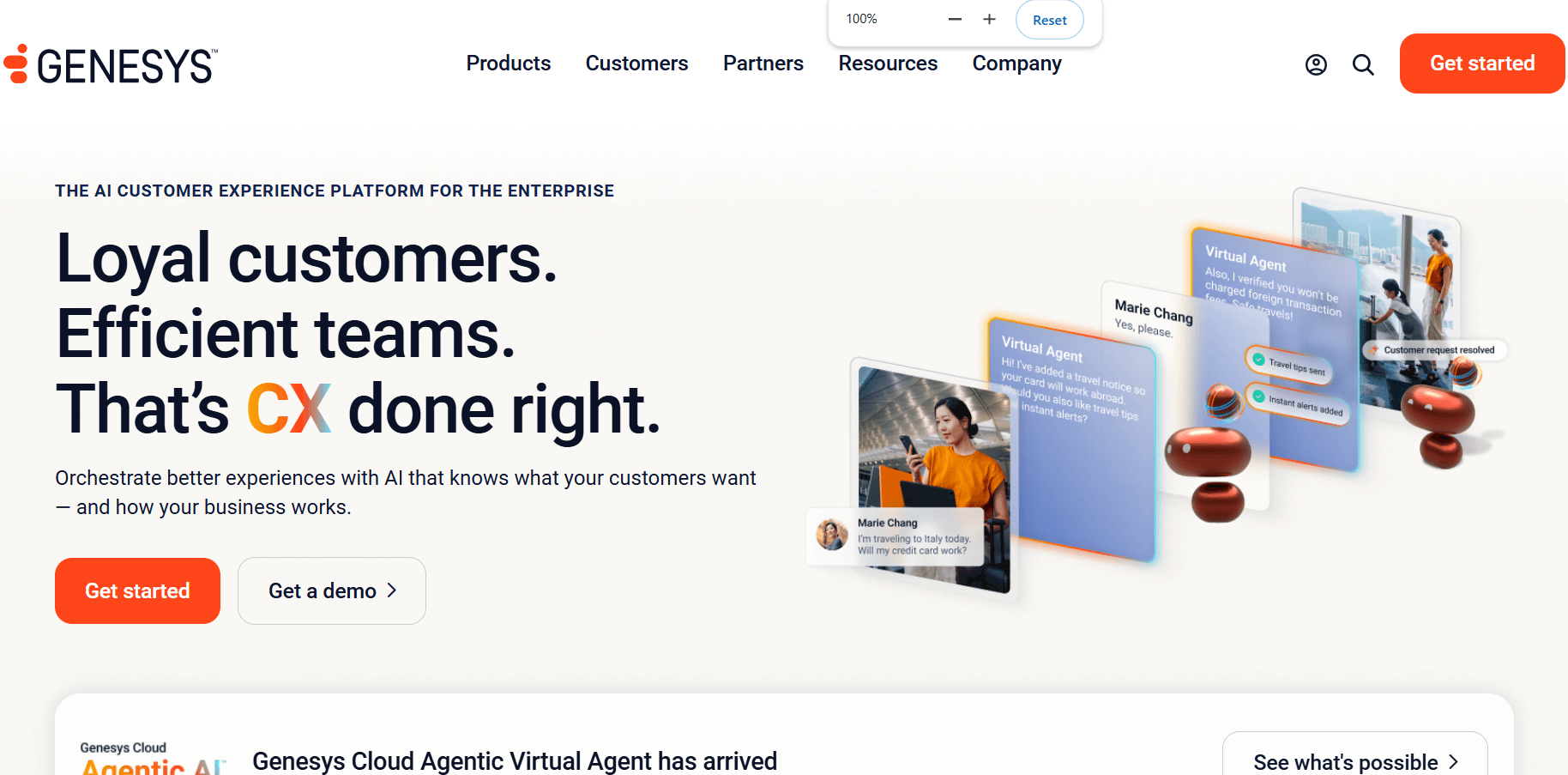
Genesys Cloud includes native AI Studio for no-code virtual agent design, predictive routing, and agent copilot features. Pricing typically runs $75 to $150 per user per month, plus usage-based AI fees. Lowest friction path for existing Genesys customers.
7. NICE CXone
Best for: Large enterprise contact centers needing 100% interaction recording with AI automation.
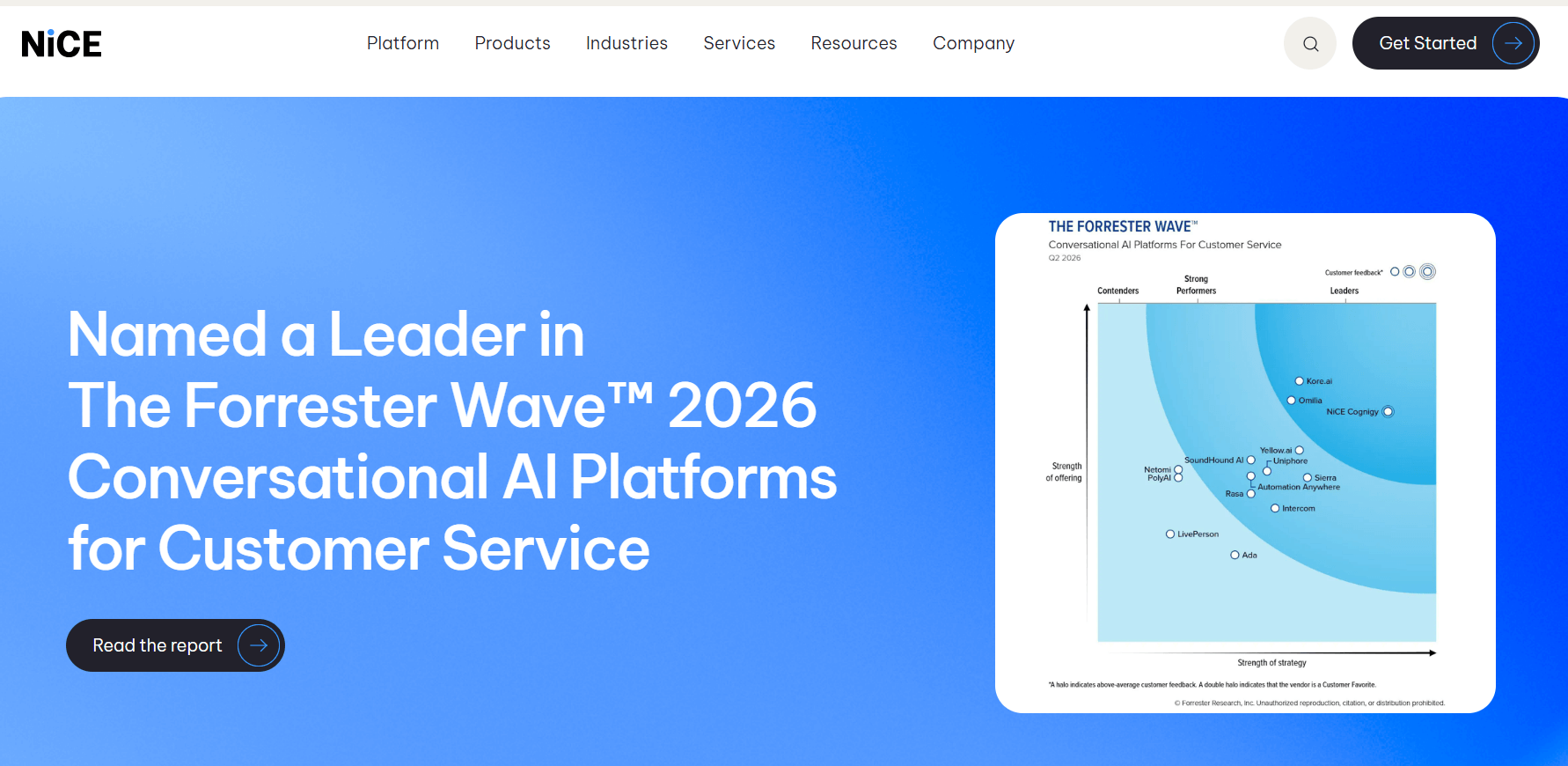
NICE CXone Mpower includes conversational AI capabilities with Cognigy integration. Enterprise scale with strong workforce engagement and compliance features. Complex for smaller teams but comprehensive for large operations.
8. CloudTalk
Best for: SMB sales and support teams wanting an affordable voice AI entry point.
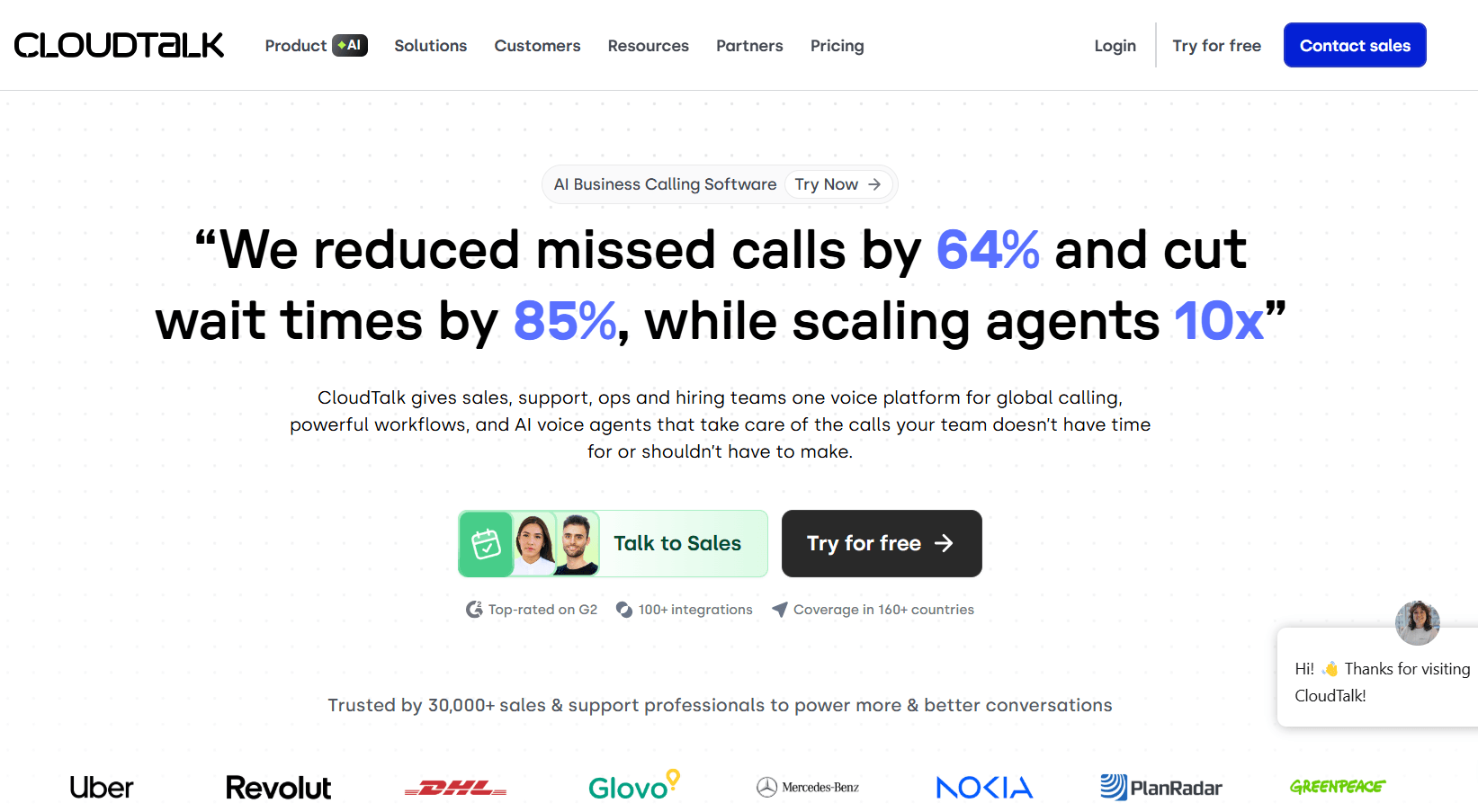
CloudTalk offers AI voice agents for inbound and outbound calls with CRM integration. Pricing starts at $18 per user per month for the Starter plan. Good fit for SMBs that want to automate missed calls, lead follow-ups, and basic support without enterprise overhead.
How to Decide If Your Contact Center Is Ready
Not every contact center needs voice AI agents today. Here’s the honest assessment.
You’re ready if: You handle more than 5,000 calls per month, your agents spend most of their time on repetitive, scriptable interactions, your after-hours coverage is thin or nonexistent, and you have clear, defined workflows that an AI can follow.
You’re not ready if: Your call types are highly emotional, complex, and unique every time, you have no CRM or telephony system to integrate with, or your total call volume is low enough that a small team handles it comfortably.
For most mid-sized contact centers in 2026, the answer is somewhere in between. Start with one use case, usually inbound call containment or appointment scheduling, measure results, and expand from there.
And regardless of whether calls are handled by humans or AI, every one of those conversations should be analyzed for quality. That’s where conversation intelligence and contact center automation meet voice AI agents to form a complete stack.
Bottom Line
Voice AI agents are not coming. They are here. The platforms are production-ready, the ROI is documented, and the early movers are already rewriting their cost structures.
But voice bots handle the volume. Humans handle the nuance. And conversation intelligence watches the whole thing to make sure quality, compliance, and coaching never fall through the cracks.
Start small. Measure everything. And make sure every conversation, whether handled by a human or a machine, gets scored and analyzed. That’s how you build a contact center that actually gets better over time.


 On this page