Your inbound team truly is your brand’s frontline.
And one bad support call can send a customer running.
Over half of consumers will switch to a competitor after just one poor service experience.
On the flip side, delivering great call experiences wins trust, loyalty, and repeat business.
Even in 2025, with AI and automation reshaping customer service, the human touch remains vital.
A recent survey found that 93.4% of customers prefer speaking to a human over AI for complex or emotional issues.
Voice support delivers clarity and empathy that digital channels often lack.
This guide offers 13 best practices and 5 practical tips to help your inbound call center excel.
Let’s get started!
A. What is an inbound call center?
An inbound call center is a hub where agents handle incoming customer calls.
Your customers reach out when they need help, have questions, or want to make purchases.
Unlike outbound centers that make calls, inbound teams respond to customer-initiated contact.
These calls cover a range of needs, such as:
- Tech support (“My app isn’t working!”)
- Billing questions (“What’s this charge on my bill?”)
- Product info (“Does this come in blue?”)
- Booking appointments (“Can I schedule a service?”)
- Complaints (“I’m not happy with my order…”)
In today’s world, it’s one crucial piece of the puzzle.
Customers might start online but often hop to a call for the real solution.
Your call center needs to fit seamlessly into that journey.
In 2025’s omnichannel world, inbound call centers are crucial for delivering real-time, personalized assistance.
While chatbots and emails handle simple queries, voice support excels when customers need a human connection.
Definition: An inbound call center is a team that handles incoming calls from customers. These calls usually involve questions, support requests, or account related issues. Unlike outbound centers, agents in inbound centers don’t make sales calls they focus on helping customers who reach out first.
B. Inbound vs. outbound call centers
Understanding the differences between inbound and outbound call centers helps you optimize operations.
Here’s a clear comparison:
| Aspect | Inbound Call Center | Outbound Call Center |
| Primary Goals | Receive and resolve incoming customer inquiries and issues. Focused on service, support, and retention – keeping customers satisfied and loyal | Proactively reach out to customers or prospects. Focused on sales, lead generation, marketing outreach, appointments, or follow-ups for feedback |
| Key KPIs | First Call Resolution (FCR) rate, average handle time, customer satisfaction (CSAT), service level (speed to answer), and customer retention. Success is measured by solving problems on the first try and delighting the caller. | Conversion rate (sales or leads per call), call connection rate, calls per hour, and follow-up meeting set rate. Also monitor compliance and call quality, since missteps in sales calls can lead to lost deals or penalties. |
| Agent Training Focus | Develop deep product/service knowledge, empathy, active listening, and problem-solving skills. Training emphasizes handling a wide range of support scenarios, de-escalation techniques, and navigating systems to find answers. | Develop strong persuasion and communication skills, objection handling, and resilience. Training emphasizes sales scripts, product pitching, overcoming rejection, and strict compliance (e.g., do-not-call rules and disclosures). |
| Technology & Tools | Uses IVR menus and skill-based routing to get callers to the right agent. Integrates with CRM and a knowledge base so agents have customer info and solutions on-screen. Tools like ticketing systems, call recording, and analytics help track service quality and agent performance. | Uses auto-dialers and lead management software to efficiently contact lists of customers/prospects. CRM integration is key for tracking outreach and follow-ups. Outbound teams rely on call scripts, voicemails, and sometimes local presence dialing. They also use analytics to optimize calling times and comply with regulations. |
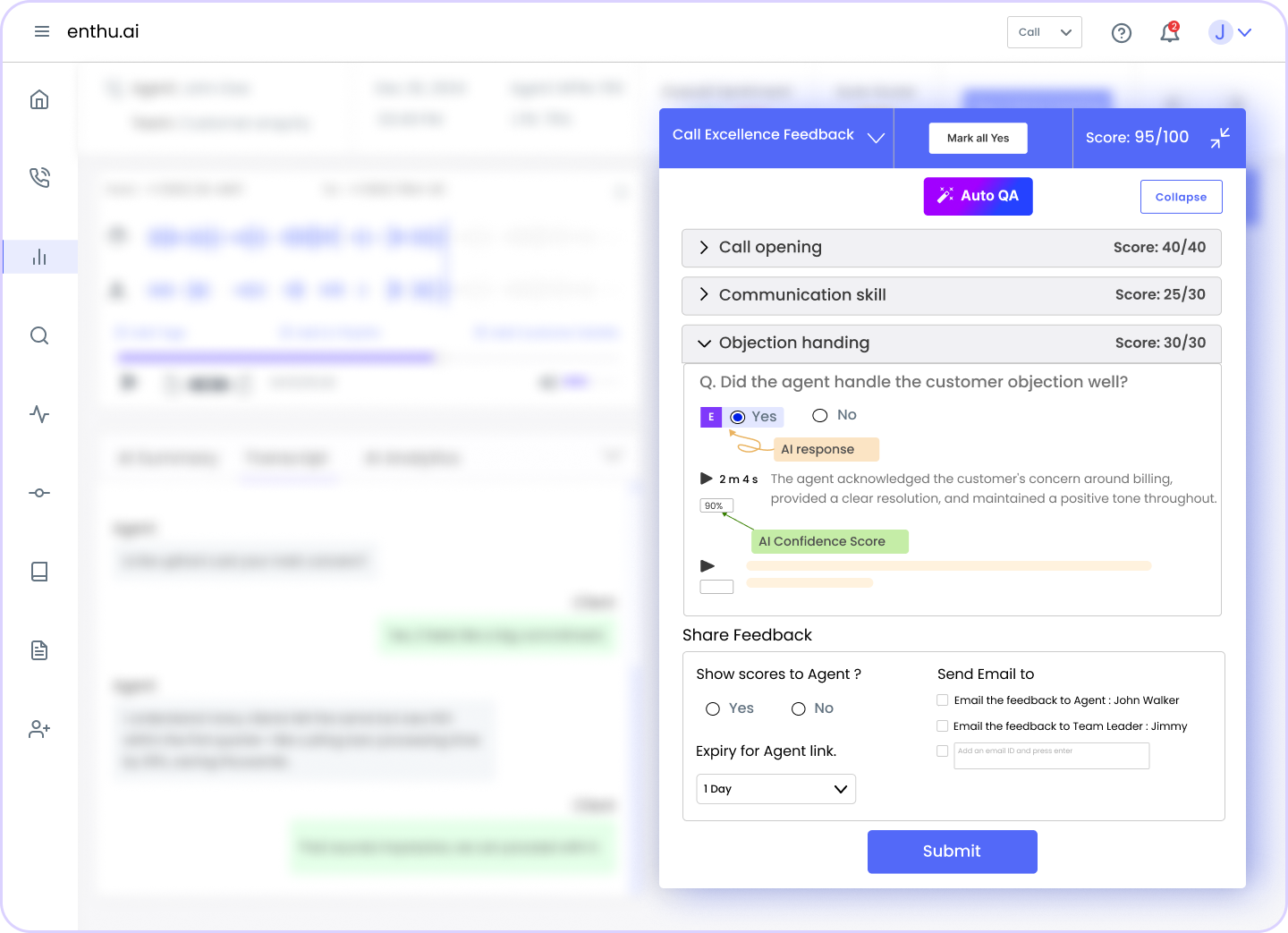
Both benefit from Automated Quality Assurance (Auto QA).
For inbound centers, Auto QA is especially valuable, monitoring 100% of calls to ensure compliance and provide actionable feedback.
Tools like Enthu’s Auto QA streamline this process, helping agents improve while maintaining high service standards.
C. 13 best practices for inbound call centers in 2025 & beyond
To run a world-class inbound call center in 2025, focus on these proven best practices.
Each one is a “quick win” you can implement to improve customer experience, team efficiency, or both:
1. Prioritize first call resolution (FCR)
FCR is a top indicator of quality. Customers hate having to call back or be passed around.
Empower your agents with the authority, knowledge, and tools to fully resolve problems without requiring follow-ups.
This may mean:
- Training agents to handle a broader range of issues,
- Improving internal knowledge bases,
- Or adjusting processes so front-line reps can do more without needing manager approvals.
A high FCR not only makes customers happier, but it also reduces repeat call volume.
2. Route calls based on skills
Use skill-based routing to get each caller to an agent who can best handle their issue.
The days of blind transfers should be long gone.
Yet 79% of callers still get rerouted at least once during support interactions.
Every unnecessary transfer risks frustration and lengthens handle time.
Set up your IVR menus and routing rules to funnel calls by issue type, language, or customer segment to the most suitably trained team.
For example, send billing questions to billing specialists or VIP clients to a dedicated tier of agents.
3. Use call scripts as a guide, not a rulebook
Scripts are helpful for greetings, verifying info, and ensuring required disclosures
But they shouldn’t make agents sound like robots.
Encourage a conversational tone.
Train your team to personalize their responses and adapt to the caller’s mood and context.
For instance, agents can use the script’s outline but still listen actively and respond naturally, rather than reading verbatim.
By treating scripts as living guides, agents can deliver accurate information and human warmth.
The result is a more authentic interaction that builds rapport, rather than a monotonous exchange that might frustrate a customer who just wants to be heard.
4. Offer continuous agent training
Products, policies, and customer expectations evolve quickly – your team should too.
Provide a mix of training, from formal refreshers on product knowledge and new tools.
For example, a bite-sized session on soft skills like empathy or handling difficult callers.
Also, leverage real calls as coaching material (e.g,. review call recordings/transcripts in team huddles to discuss what went well or could improve).
Continuous training builds agent confidence and versatility, so they can handle different kinds of issues quickly and correctly.
Ultimately, a well-trained agent is less likely to put customers on hold unnecessarily or give wrong answers, meaning faster resolutions and happier callers.
5. Automate QA to monitor 100% of calls
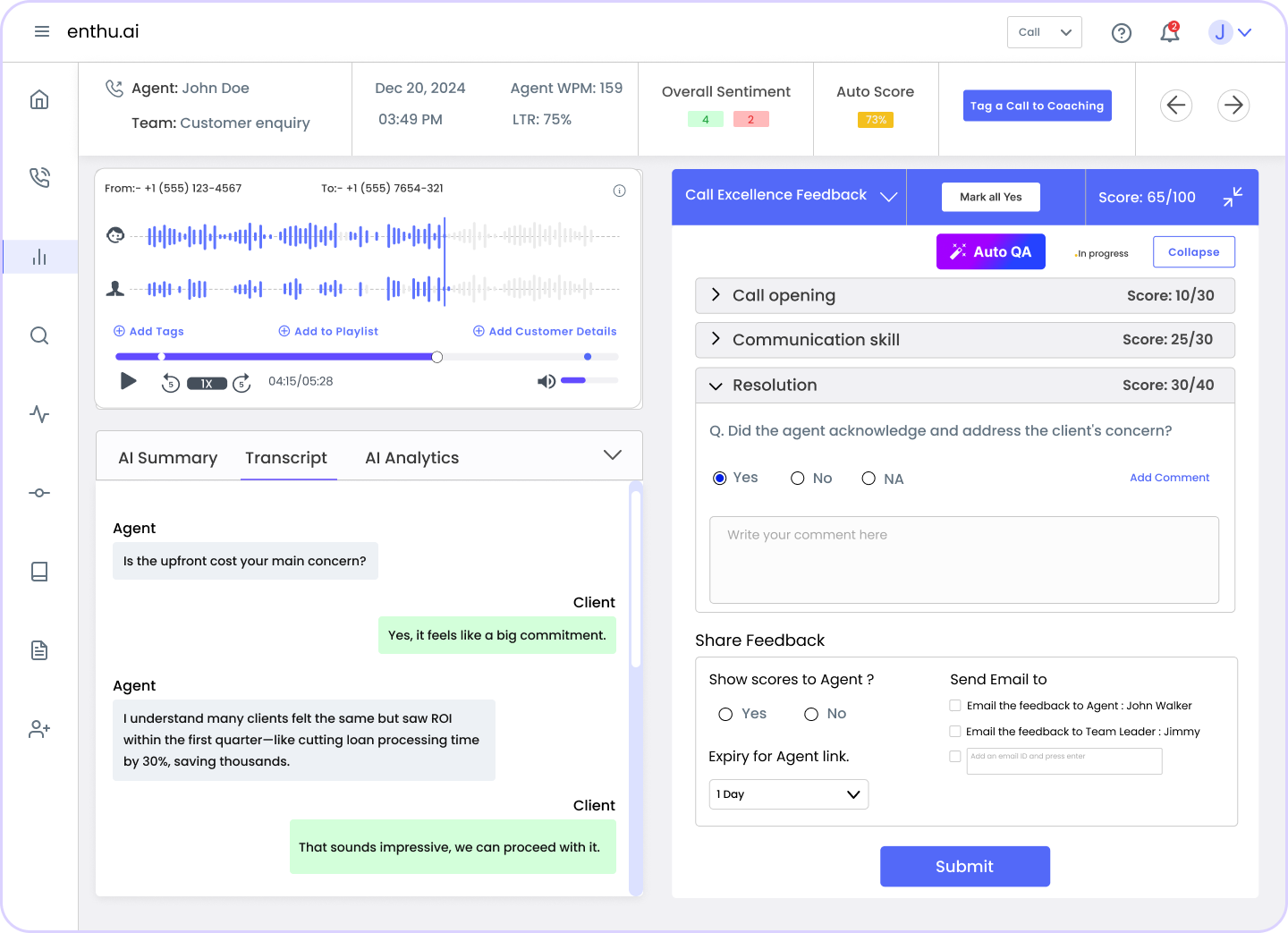
Automated QA tools can now review all of your calls, not just 5%, and do it quickly.
This means you catch more issues and can give more agents timely feedback.
For example, an auto QA system can flag if an agent missed a mandatory greeting, used an unprofessional tone, or didn’t upsell a service when they should have.
It can also automatically score calls on key points like empathy, compliance, or accuracy.
The benefits?
Less time spent on tedious manual call audits, and more consistent, data-driven evaluations for your team
And because you’re reviewing 100% of interactions, you’ll spot trends early – e.g., a surge in calls about a bug, or a policy that’s confusing customers, and address them before they blow up.
Pro Tip: If you’re new to Auto QA, many providers (like Enthu.AI) offer free trial evaluations so you can see the impact in action.
6. Use metrics that reflect real success
Identify 5–8 core KPIs that balance efficiency and experience.
Common examples:
- First Call Resolution,
- CSAT or NPS (customer satisfaction scores),
- Average Handle Time,
- Service Level (speed of answer),
- and QA Quality Scores.
By using a mix of metrics, you get a 360° view of performance.
For example, pairing AHT with CSAT ensures agents aren’t just fast but also effective.
Regularly review and calibrate these KPIs to your business goals.
If a metric isn’t truly linked to customer happiness or operational success, reconsider its importance.
Instead, emphasize metrics that drive long-term success (happy, loyal customers and efficient operations).
7. Run call calibration sessions
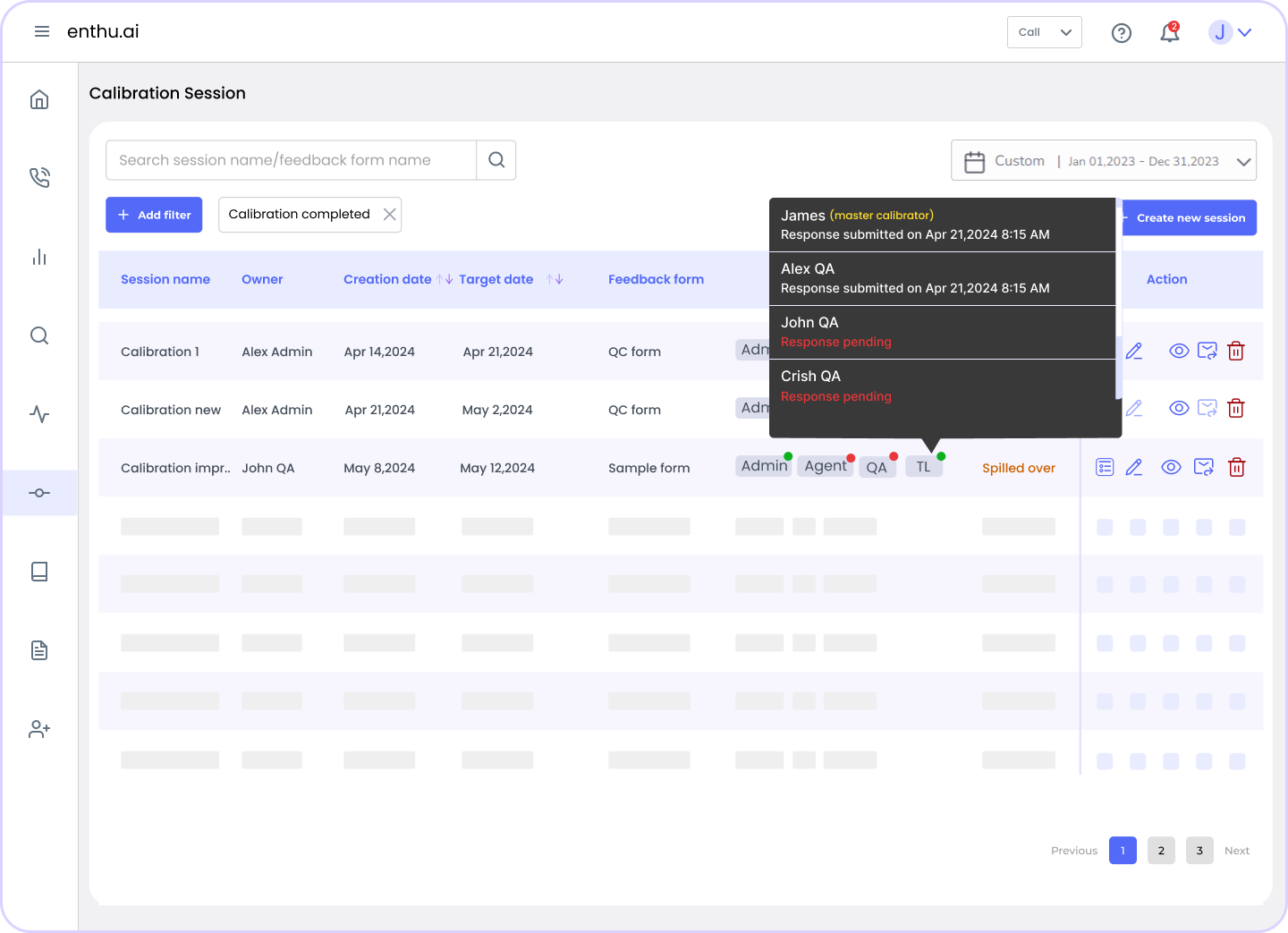
In these sessions, the team might jointly listen to a sample call, and each person scores it using your QA form.
Then you compare scores and discuss any differences.
This process aligns everyone on what “good” sounds like, from how to score an agent’s tone or adherence to policy, to what warrants an X versus a Y score on a rubric.
Calibration prevents situations where one QA analyst is too lenient or harsh compared to another.
It makes your QA feedback fair and reliable for agents (so they don’t get mixed messages).
Aim to calibrate monthly or quarterly, and whenever you update your scorecard or quality guidelines.
When your QA process is consistent and fair, agents trust the feedback more and focus on improving the right things, ultimately leading to better customer experiences.
8. Promote active listening
Encourage agents to listen first, speak second.
They should use techniques like paraphrasing and summarizing the customer’s concern, asking clarifying questions, and not interrupting.
For example, repeating back what the customer said (“Just to confirm, you’re having trouble logging into your account since yesterday, correct?”) shows the caller you understand.
It also avoids misunderstandings.
Active listening helps defuse tension because customers feel heard and respected.
Even a difficult caller can become more cooperative when an agent patiently lets them explain and acknowledges their frustration.
Train your team on these techniques and remind them that silence on a call isn’t bad – it’s often a sign of good listening.
By truly hearing the customer out, agents can gather all the info needed to solve the problem, and customers walk away feeling taken care of.
9. Integrate CRM and knowledge base for agents
Your agents shouldn’t juggle six tabs or park callers on hold while they hunt for answers.
When you connect CRM, ticketing, and knowledge base in one view, the moment a call lands, your agent sees order history, open cases, notes, and any recent emails.
They can also search a lightning-fast library of product guides and troubleshooting steps without leaving the screen.
Information gaps sink results – 60 % of failed first-contact resolutions happen because agents lack the right data.
A tight integration fixes that.
It can even screen-pop the customer’s record by caller ID or auto-fill fields, shaving minutes off every interaction.
Instead of clicking around, your agent focuses on listening, empathizing, and solving issues – no repeat calls, no frustrated holds.
10. Use forecasting tools for scheduling
Optimize your staffing with modern forecasting and scheduling tools.
Inbound call volume can fluctuate wildly (by time of day, day of week, season, or due to marketing events).
Understaffed and customers wait forever; overstaffed and you’re burning budget.
Workforce Management (WFM) software takes the guesswork out by analyzing historical call data and other factors to predict demand, then creating schedules to match.
Today’s forecasting even considers things like promotions or weather spikes that drive calls.
The result is smarter schedules that have just the right number of agents at each hour.
Many tools can even auto-adjust or suggest shift changes on the fly, and let agents swap shifts easily via an app.
This leads to less overtime, fewer idle agents, and shorter wait times for customers.
11. Act on customer feedback
Don’t just collect customer feedback – use it.
Whether through post-call surveys, feedback forms, or even social media comments, inbound centers should loop customer input back into operations.
This can reveal pain points (e.g., a policy that everyone is complaining about, or an agent who consistently earns praise).
It’s especially vital because most unhappy customers won’t complain to you directly.
Only 1 out of 26 will say something, while the other 25 will just silently leave.
So when a customer does provide feedback, treat it like gold.
Analyze your CSAT or NPS survey results for trends.
Share positive comments with the team to celebrate wins, and discuss negative ones constructively to find root causes.
Also, close the loop with customers when possible.
For example, if a survey respondent had a poor experience but left contact info, follow up to acknowledge their issue and try to make it right.
Showing that you listen and improve based on feedback can turn detractors into loyal fans.
It also lowers churn – you fix problems before more customers decide to leave over them.
12. Upgrade to modern, integrated tools
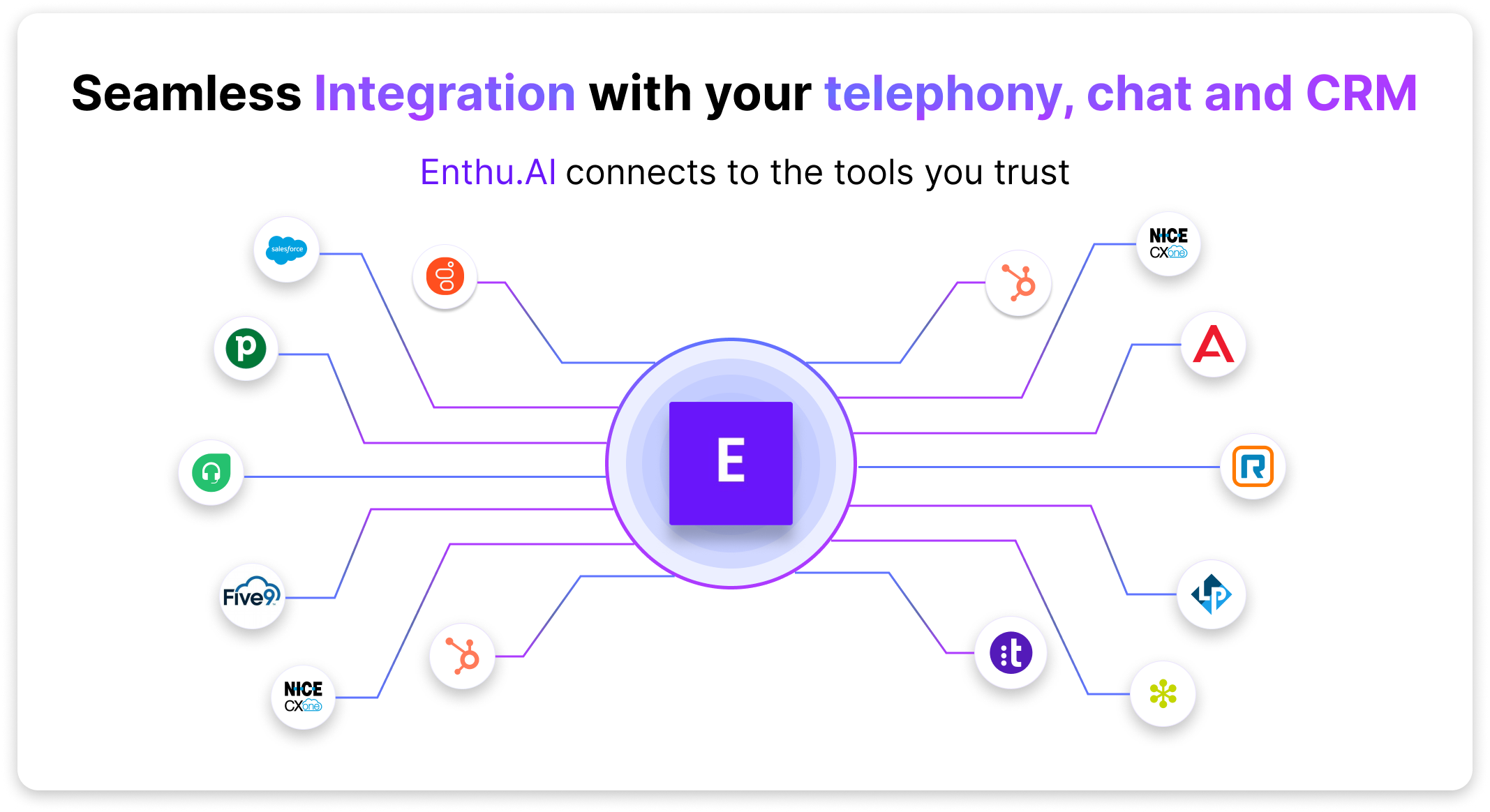
If you’re still using a 90s-era on-premise PBX or juggling 5 different apps during a call, it’s time to modernize.
Modern call center software (often cloud-based) provides an integrated platform with voice, chat, email, and social channels in one place.
It offers omnichannel options, CRM integration, scalability, robust security, and rich analytics out of the box.
By choosing the right solution, you empower both agents and managers.
Agents get a unified desktop and AI assistants (like suggested replies or knowledge lookup) to handle interactions more easily, while managers get real-time dashboards and reports across all channels.
For example, today’s tools can automatically transcribe calls and analyze sentiment, alerting you to unhappy conversations in real time. Or they can integrate your phone and CRM so that screen pops show customer info instantly, as mentioned earlier.
13. Recognize and reward agents often
Regularly recognize and reward good performance, both big and small.
This can be as simple as a public shout-out in team meetings (“Kudos to Sam for handling that tough call calmly yesterday!”) or small rewards for achieving goals (like an Amazon gift card for highest CSAT this month).
Many centers use gamification: friendly competitions with real-time dashboards, badges, or prizes for things like the highest FCR rate or the most positive surveys.
Recognition makes agents feel valued and reinforces the behaviors you want to see.
When agents are engaged and emotionally committed, they’re more vested in helping the company succeed and less likely to leave (reducing costly turnover).
So, celebrate the wins, coach constructively on the misses, and build a supportive environment.
D. 5 Quick tips for inbound call success
Sometimes, small habits make a big difference.
Here are five quick-hit tips you and your agents can apply immediately for better calls:
1 . Smile before you pick up – callers hear it
Smile for three seconds before you say “hello.”
Psychologists say this simple act flips your mood switch, relaxes your vocal cords, and pushes warmth into every word.
Listeners pick up that positivity instantly, so rapport starts even before you introduce yourself.
A cheap mirror on each desk keeps the habit top-of-mind and costs nothing compared with the loyalty a friendly tone earns.
2 . Use Auto QA for full-coverage feedback
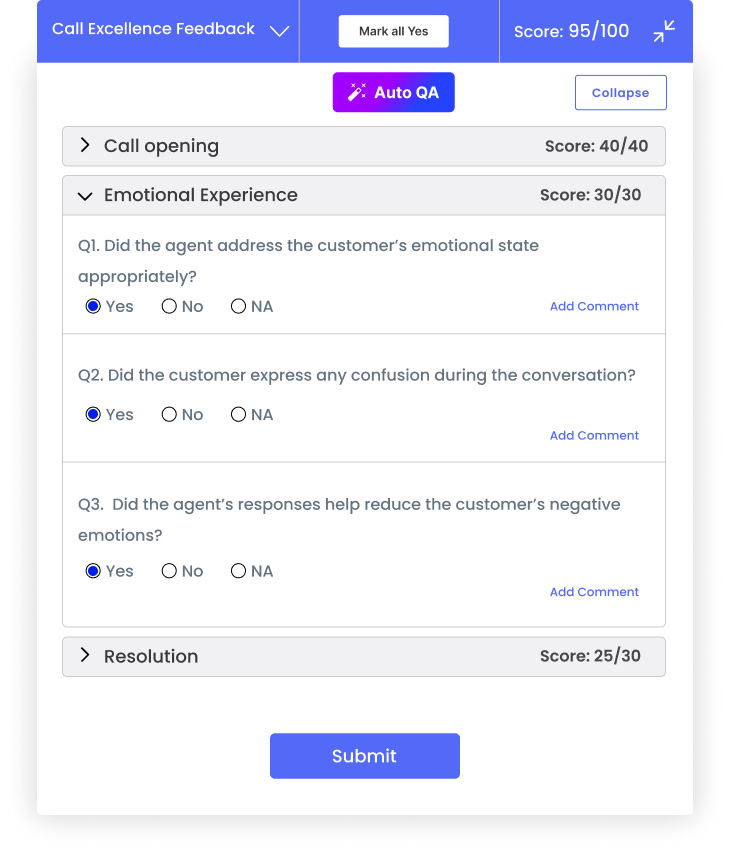
Let AI score 100 percent of calls for greetings, tone, compliance, and sentiment.
Automated QA flags problem clips within minutes, so you spend time coaching instead of sampling.
Agents get faster, fairer feedback and correct missteps on the next shift, not next month.
Continuous insights also uncover training gaps and trending issues before they snowball.
Smart monitoring turns quality from a chore into a growth engine.
3 . Keep a “shortcut sheet” of top fixes
Create one quick-reference page – digital or laminated – that lists the ten most common issues with exact steps, policy links, and key codes.
New and seasoned reps alike avoid frantic knowledge-base dives, slash dead air, and keep customers off hold.
The sheet evolves with every product update, so make version control a ritual.
Tiny cheat sheets lead to quicker resolutions and calmer calls.
4 . Use the customer’s name – naturally
Drop the caller’s name in your greeting, during confirmation, and once more when you close.
Personalization shows respect and turns a transaction into a conversation.
Using someone’s name is among the fastest ways to signal empathy and build rapport.
Keep it genuine. Overusing the name feels robotic.
Aim for two or three mentions, just enough to remind them you see a person, not a ticket.
5 . Close with “Anything else I can help with?”
Before hanging up, invite any lingering questions.
This open door surfaces hidden concerns, prevents repeat calls, and leaves customers feeling cared for.
The final word should come from the customer; this question gives them that space and shows you’re not rushing them off the line.
Finish with thanks and a warm goodbye once they’re satisfied.
Conclusion
Running a top-notch inbound call center in 2025 means blending human empathy with smart technology.
These 13 best practices and 5 tips, from prioritizing FCR to using tools like Enthu’s Auto QA.
Equip your team to deliver exceptional service.
Start implementing these strategies to boost customer loyalty, streamline operations, and keep your agents motivated.
Try Enthu’s 5 free evaluations to see how automation can transform your call center.
FAQs
1. What's the most important metric for inbound call centers?
First Call Resolution (FCR) is the most crucial metric. It directly impacts customer satisfaction, reduces costs, and improves agent morale. Aim for 85% or higher FCR rates while maintaining quality standards.
2. How can automated QA improve my call center operations?
Automated QA analyzes 100% of calls instead of the typical 1-3% manual sampling covers. It provides consistent scoring, identifies trends quickly, and frees up management time for coaching. Most centers see immediate improvements in quality consistency and agent development.
3. Should inbound agents use the same training as outbound agents?
No, inbound and outbound require different skill sets. Inbound agents focus on problem-solving, empathy, and active listening. Outbound agents need persuasion and conversation control skills. Tailor training programs to match the specific demands of each role.